


From $50K Deals to $1M+: How a Strategic Account Manager Rebuilt His Entire Deal Process
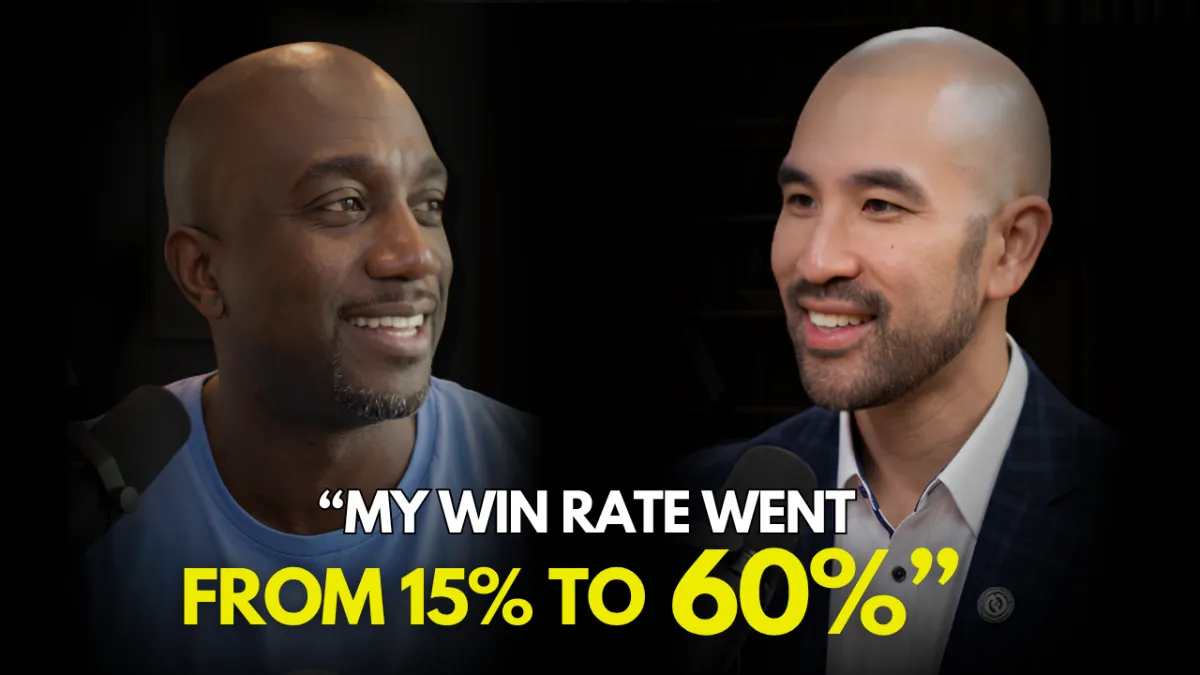
TL;DR: Kevin Gordon, a strategic account manager at GitHub, was already a strong performer when his deals started slipping and his forecast stopped holding. The problem started long before the close. He rebuilt his entire deal process: deeper discovery, multithreading every stakeholder, building a real business case, and managing the deal to the signature. His average deal size went from $50K to $300K to $400K, his win rate climbed from 15% to between 40% and 60%, and his discounting fell from 20 to 40% down to almost nothing. He is now working $1M+ deals.
Most reps who miss the number sharpen the wrong skill. A deal slips, so they study closing. They practice negotiation. They drop the price to drag it over the line. The slip almost never starts at the close.
Kevin Gordon proved it on himself. Twenty years in sales, a strategic account manager at GitHub covering the largest financial institutions in Canada, and already doing well on paper. His pipeline was strong. His closing felt fine. Yet deals kept sliding a quarter, and the forecast kept missing. The real gap was upstream, in a discovery process he thought he had handled.
This is what he changed, in the order he changed it, so you can copy it before you discount another deal.
Results at a glance
Average deal size: $50K to $70K before, now $300K to $400K, with $1M+ deals in play
Win rate: about 15 to 20% before, 40 to 60% now
Discounting: 20 to 40% before, close to zero now
Sales cycle: slipping and unpredictable before, now closing inside about a quarter
Where Kevin started, and why "doing well" was hiding the problem
On paper, nothing looked broken. Kevin had two decades of experience, a full pipeline, and a real talent for building it. If his VP graded him, he passed. The problem only showed up at the finish line. Deals he called committed would slip. A forecast he believed would miss. As he put it, he was "really good" at building pipeline, but closing and forecasting accurately were where it broke down.
He assumed the issue lived at the end of the deal. Better closing. Better negotiation. That assumption sent him sharpening the wrong tool for years.
Why working on his closing never fixed the slipping deals
The deals were not dying in the close. They were dying upstream, across the whole deal. Kevin was asking the surface questions: budget, timeline, the standard one-on-one checklist. He thought he had discovery handled. He believed the missing piece was closing and negotiating.
It was the opposite. "My discovery needed to be a little bit more redefined," he said. Surface answers gave him a technical win and a false read on the deal. He would hear "we're good to go," call it closed, and then watch procurement, a VP, and an executive each surface new requirements he had never uncovered. By the time he reached the signature, he was reacting, re-selling, and discounting to recover a timeline he never controlled.
What Kevin changed: he rebuilt the deal, start to finish
Kevin rebuilt the whole motion, and it ran on four moves.
First, he stopped accepting surface answers. Budget and timeline are the start. They are not the finish. He started asking why behind each answer, then tied it to impact: what the problem costs the business, and what it costs the person he was talking to. A buyer who says "I want a better report" gets a different question now. Why does that matter, and what changes for you when you have it.
Second, he mapped the full buying committee early. The technical win is not the deal. Kevin learned to find procurement, the VP, and the executive at the start, understand each one's why, and bring them in before the finish line instead of getting ambushed by them at it. As he described the old way: get the technical yes, assume it closes, then "next thing you know you're talking to procurement," then the executive, then "sorry, so-and-so is not even here to do the signature." Now he gathers all of that up front, so everyone is aligned before the close.
Third, he made the value undeniable and documented the cost of inaction. Instead of letting price be the conversation, he showed what the buyer loses by waiting. "If we don't close at this time, this is what you're losing out on." When the buyer sees a hundred dollars turning into a thousand, a discount stops being the reason to buy.
Fourth, he ran the deal to the signature on purpose. He knew which stakeholder to bring in and when, mapped the path to a signed contract early, and stopped leaving the close to chance. His forecast started holding because he managed the deal instead of reacting to it.
How building the business case cut his discounting from 40% to almost zero
Discounting is what you reach for when the buyer does not see the value. Kevin used to discount 20 to 40% to pull deals into a quarter, because his buyers, in his words, were "trained" to wait for an end-of-quarter price. Nothing was changing for them, so there was no reason to move.
Once he quantified the impact and documented the cost of waiting, the math changed. The buyer had a reason to close now that had nothing to do with price. The discount became unnecessary. He now rarely discounts near the end of a deal, and he stopped surrendering 20 to 40% of every deal's value to do it.
How his win rate went from 15% to 60%, mostly on referrals
Great discovery does more than close the deal in front of you. It earns the next one. Kevin's win rate went from about 15 to 20% up to between 40 and 60%, and the biggest driver was internal referrals. When he ran discovery like a counselor instead of a vendor, understanding people's personal wins and staying on a text-message basis with them, his customers started referring him across departments. A referred deal is the warm version of a cold call. His new pipeline showed up pre-sold.
His deal sizes climbed the same way. When the buyer trusts the process, expansion comes up on its own. "What if we do this quantity," they ask. A $50K deal becomes a $300K to $400K deal, and the $1M+ deals follow.
Where Kevin is now, and what a sales leader should take from it
Kevin rebuilt the whole deal, every stage of it. He redefined discovery, multithreaded every buyer early, built a real business case, and managed each deal to the signature. The deals got bigger, the discounts went away, the win rate doubled and then some, and the forecast finally held.
The pattern repeats on every team that closes bigger without discounting. Slipping deals and soft forecasts are an upstream process problem wearing a closing costume. Fix the start of the deal and the end of the deal fixes itself.
If your reps are sharp on pipeline and still slipping at the close, the gap is almost never their closing. It is everything that happens before the close: the discovery, the stakeholders, the business case, the way the deal is run. That is a system you can install. You do not have to hire a new personality to get it.
Frequently Asked Questions
Why do my sales deals keep slipping to the next quarter?
Usually because the deal was mismanaged upstream. The close is rarely the real problem. When reps run shallow discovery, skip the business case, and find the real stakeholders too late, deals stall at procurement or the executive level and slide. Kevin Gordon fixed his discovery and went from slipping deals to closing inside about a quarter, while his average deal grew from $50K to $300K to $400K.
How do you increase average deal size in B2B sales?
Run deeper discovery that ties your solution to business and personal impact, then map every stakeholder so the deal expands instead of shrinking. Kevin's average deal went from $50K to $70K up to $300K to $400K, with $1M+ deals now in play, on the same product and territory.
How do you stop discounting to close deals?
Show the cost of inaction in the buyer's own numbers so price stops being the reason to buy. Kevin used to discount 20 to 40% to pull deals into a quarter. After he quantified value and documented what the buyer loses by waiting, his discounting dropped to almost nothing.
What is multithreading in sales and why does it matter?
Multithreading means engaging every person who can influence or block a deal (the technical buyer, procurement, the VP, the executive) early, instead of at the finish line. It prevents the deal from resetting late. Kevin credits multithreading early for both his higher win rate and his larger deals.
How do you improve sales win rate without more leads?
Win the deals you already have by running discovery that earns trust and internal referrals. Kevin's win rate went from about 15% to between 40 and 60%, driven largely by referrals across departments, which are the warm version of a cold call.
Want your whole team selling like Kevin, with deals four to eight times bigger, a win rate that climbs from 15% to 60%, and almost no discounting? Book a free Revenue Strategy Call below. We'll look at where the number still runs through you and, if we can help, show you how. Either way you'll leave with something you can use.