
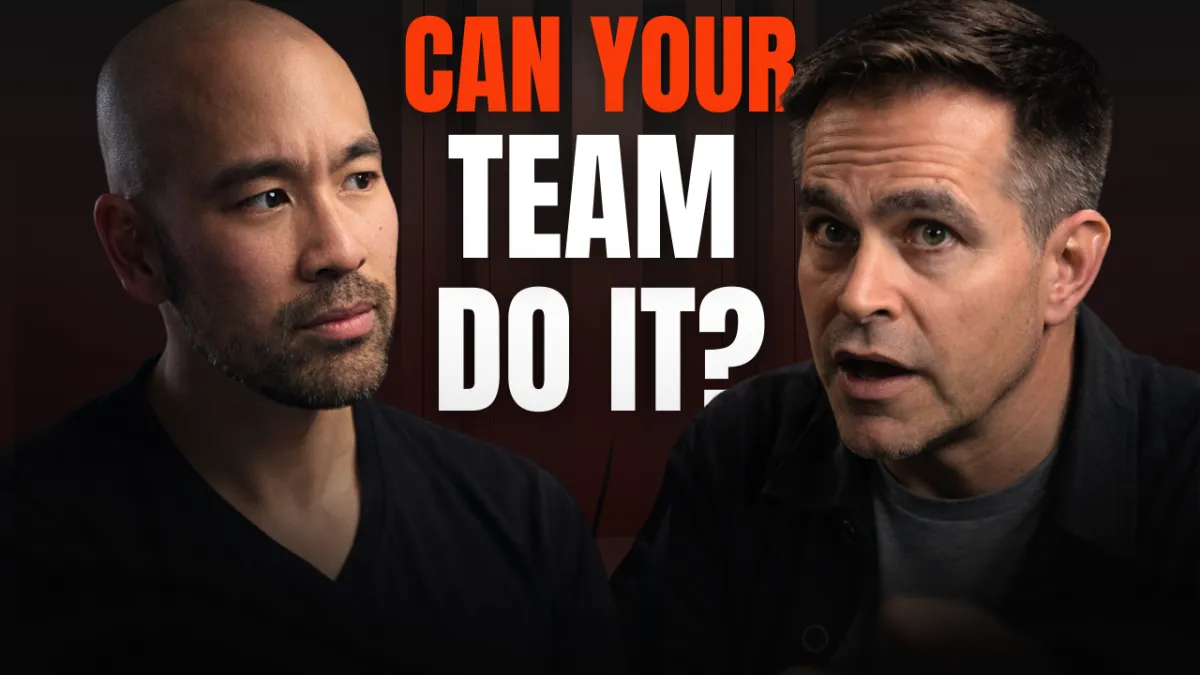
The 7 Steps to Keep Your Sales Team's Swagger (From a Former Athletic Trainer)
Jeff Bajorek was a certified athletic trainer before he sold medical devices.
He worked with athletes who had real pain. Broken bones. Torn ligaments. Serious injuries.
The problem? Athletes don't tell you how much pain they're in.
They're stoic. They're tough. They don't want you to see them sweat.
The warrior mentality is pervasive.
Same with sales leaders.
"Q1 sucked, but Q2 will be fine"
Sales leaders hide pain just like athletes do.
They limp back onto the field. They say "No, no, I got this."
"This was a blip. A minor setback. We'll be okay."
Then they try to run. You see them limping. You know they don't have what it takes to get where they want to go.
You need to do some real digging. You rely on experience and context to figure out how much pain they're actually in.
Discovery like a physical examination
Jeff's on-field and training room evaluations were similar to discovery conversations today.
You sense something is there.
You ask targeted questions.
You do targeted maneuvers. Sometimes a physical examination.
You rule things out. When you rule enough things out, you realize what you're really dealing with.
Then you ask one or two key questions.
"What's your pain scale? One to 10?"
"It's a 12."
Probably broken.
"What's your pain scale?"
"Probably a three."
Wait. You couldn't stand on this thing. That doesn't suggest a three out of 10.
You dig deeper.
The Bob problem
"We've got great relationships."
Every sales leader says this about their top rep Bob.
Bob's been doing this for 25 years. Bob just has great relationships.
You ask Bob: "What makes your relationships different?"
Bob says: "I don't know. I just... have good relationships."
That's not helpful.
When you shadow Bob and pay close attention, he does little things no one else does.
He knows the names of everybody in the office.
He knows the motives of the executives he's speaking to. So he speaks in terms of value, not features.
Bob can refer to these things but can't explain them.
Your job as a leader: make what Bob does repeatable.
Not by asking Bob to explain it. By watching Bob and breaking down exactly what he does differently.
Doubt kills more deals than skill gaps
Jeff teaches something he calls "keeping your swagger."
Seven steps to sell with confidence:
1. Know yourself
2. Know your best customers
3. Know your process
4. Know your methods
5. Know your rules
6. Be honest
7. Keep your swagger
Swagger is rooted in integrity.
When you show up with doubt, you've made a difficult game even more difficult.
The best salespeople don't close half their deals. You need confidence.
Reps lose swagger when they switch industries. They come from another platform. They sold physical security. Now they're selling cybersecurity for the first time.
"I used to be really good at this. Why am I struggling now?"
Doubt creeps in.
Your job: rebuild their swagger by showing them what's working.
Not generic reassurance. Specific proof.
"You did this well on that call. Do it again here."
Trust takes time
Jeff had an age gap and implied authority gap working with high school athletes. Five to six years usually.
That goes a long way when someone's 15 and you're 21.
They knew he had their best interests in mind.
How do you accomplish that in the business world?
Show you provide value when things are good or when things are bad.
Build your personal brand over time.
Consistency builds trust.
Jeff's work
Jeff helps VPs of sales understand what their best reps do and why their best customers buy.
Then he makes those actions repeatable.
Not by asking Bob to explain it.
By watching. Breaking it down. Building a system.



Mail
Facebook
LinkedIn
X
Pinterest
Snapchat
Reddit