


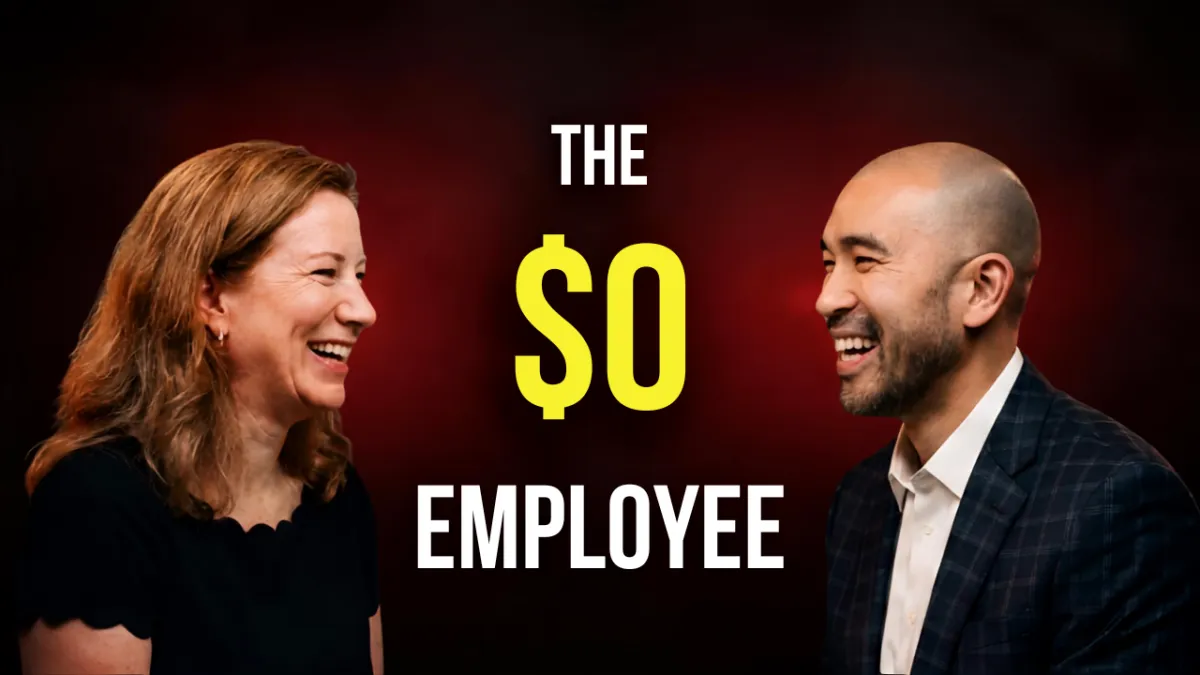
Introverts, Silence, and AI: How CallRail's VP of Sales Builds Conversion
TL;DR: Margaret Wise runs sales at CallRail like an operator. In this episode she argues that introverts are underrated closers, that silence is one of the most reliable tools in a deal, and that AI has already lifted her conversion numbers. Here is how she builds a repeatable revenue engine and proves the impact.
Are introverts good at sales? Margaret Wise says they are underrated.
The stereotype rewards the loud, look-at-me rep. Margaret's experience points the other way. Introverts listen more deliberately. They process before they respond. That extra beat helps them understand the problem clearly, ask a sharper follow-up, and build credibility with the buyer.
She screens for two things. First, layered questions. She asks something with several parts and watches whether the candidate answers every layer or only the first or the last. Her go-to: "Tell me about a sales cycle you went through. What were the key milestones? What were the key learnings? And what made you choose that example?" Second, she watches the pause. Does the candidate answer and sit comfortably in silence, or rush to fill it?
Why silence closes deals
Margaret has a few sayings. Shut up and listen. When you've sold it, stop selling. And the one most reps ignore: people tell you more when you pause and let the silence sit. The buyer is usually the one who gets uncomfortable first, and they fill the gap with information you would never have gotten if you rushed ahead.
She trains it by modeling it. In one-on-ones she goes quiet, names what she did, then has the rep try it. Years ago, running software demos, she taught sales engineers a physical trick. Move the mouse, then take your hand off it completely. Hand on the mouse, you keep clicking and talking. Hand off, you create the pause.
Marcus adds a field version. Sitting next to a rep about to oversell into a silence, he would tap their foot under the table. Do not give the buyer a chance to talk themselves back out of it. When the moment clicks on the other side of the table, let them sit in it.
Run sales like an operator
Margaret came up in enterprise, chasing large deals with lumpy quarters and pipeline that was hard to balance. Moving into SMB and higher-volume selling fit her orientation toward process and data. She calls it bringing an engineer's brain to sales.
In startup-to-scale environments she builds leading indicators, not only lagging ones. That means measuring earlier: how many opportunities, and also what stage, days in stage, and call volume. Full-funnel revenue instead of bottom-of-funnel guessing. It also means defining terms most teams leave fuzzy. What counts as an opportunity. What it takes to move a stage. Skip those definitions and your conversion data will lie to you.
Marcus shares a client with a claimed 80% win rate, measured from opportunity creation to close, with no clear criteria for what entered the funnel. Measured from the first discovery call instead, the real win rate was about 8%. Only then could every stage be measured and the leaks found.
Why deals stall in the middle
Margaret's most common root cause for a mid-funnel stall is weak qualification, plus two gaps. You have not learned where you rank against the buyer's other priorities, and you have not tied enough ROI to the pain. Your ROI can be strong and you still lose, because someone else is solving a problem the buyer has cared about longer, or the boss is pushing harder on it.
She separates the sales process from the buyer's journey. A rep thinks they are 90% through because they demoed, sent a proposal, and shared terms. The buyer is back at the start, working out where this fits. Budget is another trap. Whether budget exists is one question. What it takes to get someone to spend it is a different one.
Her fix on the CRM side: stop building stages around what the rep has done. Build exit criteria tied to a buyer proof point. A shared action plan. Something the prospect has invested in. That proof tells you the buyer is with you, and your timing, resources, and forecast flow from there. She adds that remote work drove more buying by consensus and more hesitation, which makes those proof points matter more.
How can sales teams measure AI's impact?
Most teams are excited about AI and cannot point to a dollar of upside. Margaret can. Her acquisitions team, which converts trials, raised throughput capacity and conversion rates at the same time using AI.
The engine started with call coaching. Her team saves Gong transcripts and runs Claude against them to score calls, compare reps, and probe for specific skills. Then they pushed further. They scrape calls for the integrations prospects ask about and send them to product. They pull competitor intel and feature requests into the roadmap. One call-coaching use case became a source of product, marketing, and roadmap insight.
For now that feedback goes to managers, who use it in team meetings and one-on-one coaching. Margaret is deliberate about not flooding reps with feedback on every call. She would rather a manager pick a few focus areas and coach them directly, which keeps leaders accountable for coaching too.
Her frontline leaders also use AI for messy Salesforce data, book-of-business insights from Looker, executive call prep, forecasting tests, and meeting prep. Her advice for leaders who feel behind: AI is the first tool that teaches you how to use it. When you are stuck, ask it where to start.
She is honest about the limits. One model blamed a "bad row read," then admitted it was making an excuse for bad data. Her rule, and Marcus's: you stay the decision-maker. Validate the data. Use AI to do the work, not to do your thinking.
Key takeaways
Hire for deliberate listeners, and test it with layered questions and a pause. Coach silence as a skill, and model it in one-on-ones. Define your stages by buyer proof, not rep activity. Qualify hard, and map the buyer's journey next to your process. Put AI to work on real conversion, then measure it.
FAQ
Are introverts good at sales?
Yes. Introverts often listen more deliberately and process before they respond, which helps them understand the buyer and build credibility. Margaret Wise screens for it with layered questions and by watching how a candidate handles a pause.
How do you use silence in a sales call?
Ask your question, then stop talking. The buyer usually fills the silence with information they did not plan to share. When a prospect signals they are sold, stop selling and let them sit in the decision.
What are exit criteria in a sales process?
Exit criteria define what has to be true to move a deal to the next stage, tied to a buyer proof point like a shared action plan. They replace stages based on rep activity with evidence that the buyer is moving with you.
How can a sales team measure AI's impact?
Start with one use case, such as scoring calls from Gong transcripts, and track a hard metric like conversion or rep capacity. CallRail's acquisitions team raised both at once, then expanded AI into product, competitor, and roadmap insight.
Connect with Margaret Wise
Margaret Wise is VP of Sales at CallRail. Find her on LinkedIn at linkedin.com/in/mgtwise, and learn more about CallRail at callrail.com.
A revenue leak is a deal you should be winning that quietly slips, money already in your pipeline that never closes. Ready to find the revenue hiding in your pipeline? Venli helps founder-led B2B companies raise Disco to Close win rates and cut sales cycles with proven sales operating systems. Book a free Revenue Strategy Call and let's build a sales team that runs without you.