


How to Build a Sales Team That Scales to $100M+
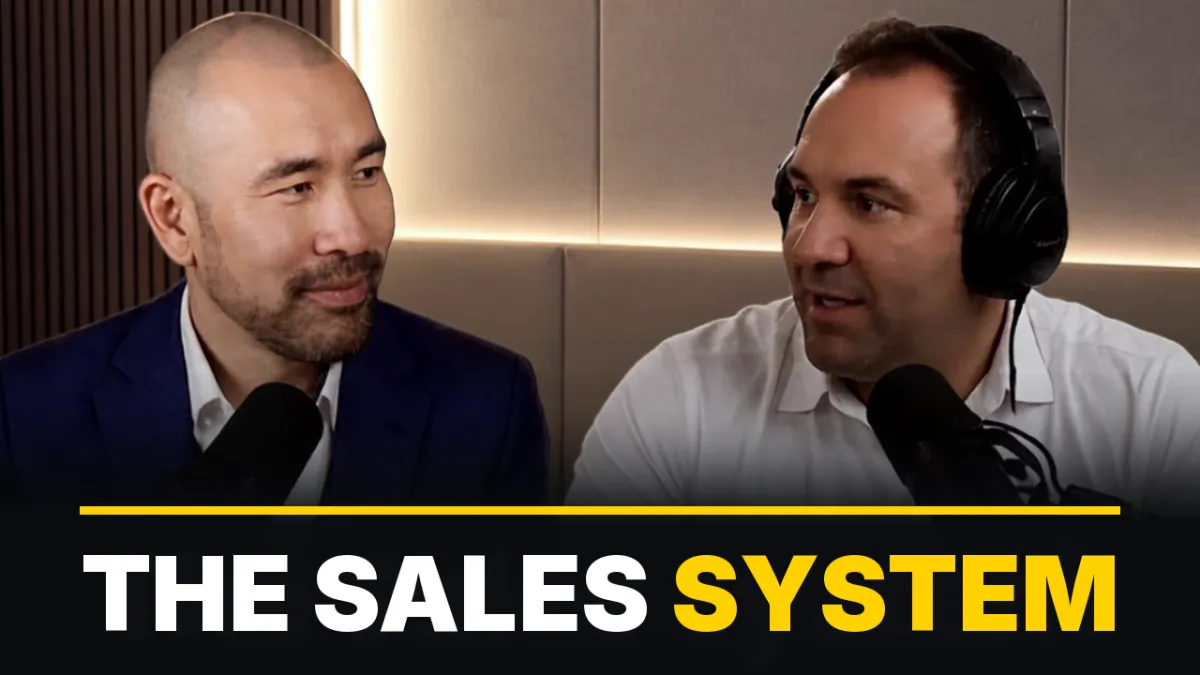
Executive Summary: To build a sales team that scales, you build systems that hold, then break them on purpose before the market does. That is how World Emblem grew from under $10 million to $100M+. Tony Morando, their Chief Sales Officer, started in the field 20 years ago and climbed to the C-suite through six promotions. On The Revenue Vault, he walked through the exact cadence, coaching model, and hiring bar behind the growth. Here is what a founder-led company can copy this week.
Key takeaways
Reps stay for culture and a direct line to leadership. They leave for a bad boss.
A daily 15-minute huddle catches problems the day they happen, not a quarter later.
Every leader, including the CEO, has a coach. That kills ego and makes coaching normal.
Your best rep will usually make a weak manager. Promote for the skill, then coach the gap.
Hire for coachability. Ask for proof, not a promise.
If you're the owner and the number still runs through you, start here
Two moves you can copy from World Emblem this quarter.
Install the daily 15-minute huddle. Group number first, then each rep, green or yellow or red. It catches a slipping deal the day it slips, so you stop being the one who finds problems a month too late.
Stop promoting your best rep on instinct. Closing and managing are different jobs. Promote for leadership, put a coach around the new manager, and protect the team from a great seller who cannot lead.
Why do salespeople really stay at a company for 20 years?
Culture, and being heard. Tony reported straight to the shareholders and had a direct line to the CEO from day one. When a rep can raise a hand, get a straight answer, and see their idea matter, they contribute more and stay longer. His line: people leave a boss, not a company. It costs nothing. Time and attention.
What does “break the business on purpose” mean?
It means changing the model before you are forced to. World Emblem's CEO, Randy Carr, runs on one rule: constantly break the business to improve it. Every couple of years the company feels new. The infrastructure that ran a $10M shop would strangle a $100M one, so the systems, the people, and the skills all have to turn over. The team that got you here will not get you to the next level.
How do you make sales decisions with data instead of gut?
You set a rule that gut alone never moves the plan. Early in Tony's career, decisions ran on emotion. When World Emblem opened its Los Angeles plant, the East Coast plan was to kick doors down and win every account. It backfired. They lost business and got thrown out of buildings. The data forced the pivot, they changed the approach, and they took the West Coast. Now a floor management system reports metrics every day, and nothing changes unless the data says so.
What is a sales accountability cadence?
It is a plan that rolls from three years down to today. World Emblem runs a three-year target, then a one-year plan, then manager sub-plans, then a day-by-day board. Every morning the team runs a 15-minute huddle: group number first, then each rep, green or yellow or red. Green gets a question too, so a win is never an accident. Red gets one question: what are we doing to fix it. Managers roll up weekly to Tony, executives roll up after that. The point is speed. Catch the miss the day it happens, before the number is already gone.
Does a daily huddle turn into micromanagement?
Only if you run it that way. When the founder's son joined as a manager, his first read was that the huddle felt like micromanaging. Then he watched it hold people accountable and coach them at the same time. Same meeting on the calendar, different delivery. “You are behind, what will you do today” is transactional. “Where are we, and how do we help you get there” changes behavior. The scoreboard has to be clear enough that every rep knows exactly where they stand.
How should a sales team use AI without losing the human touch?
Use it to speed the work, not to replace the relationship. World Emblem built an AI leadership board that reports ground-to-top in real time and coaches on the numbers. Their WeVision tool turns a photo into a finished-looking emblem proof in 30 seconds, which compresses the close cycle. Tony's warning: AI-written emails lose the rapport that a handshake business runs on, so reps are held to SLAs and blocked from firing off instant auto-replies. His take on jobs is blunt. AI will not replace reps. The reps who refuse to use it will lose to the ones who do.
Why does your best rep make a bad manager?
Because closing and leading are different jobs. Tony has seen it every way: a great rep promoted into a seat that did not fit, a manager who should never have been promoted. The fix is coaching that never stops. At World Emblem every level has a coach, top down, and that is what makes it safe for anyone to admit a gap. The rule Marcus ran at a Fortune 500 was the same: know what good looks like first, or you cannot coach anyone to it.
How do you motivate reps when it is not about money?
You find out what each rep actually wants, then you hold them to it. For a lot of top performers, money is a byproduct of a bigger goal. Managers run bi-weekly one-on-ones to surface what drives each person. Marcus shared his success plan: every new hire writes their top personal and professional goals, the why, and their skill gaps, then reviews it in person every six months with the manager watching. On his team, that helped cut turnover from 40 to 50 percent down to 17 percent in a year.
How do you hire for coachability?
Ask for proof. Anyone can say they are coachable. Tony asks for specific examples: how they were coached, what they changed, how they moved from where they were to where they landed. He looks for athletes, especially collegiate ones, because you do not get there without taking coaching. And he watches for the halo effect, the one shiny trait that hides the red flags. If the background does not match the job, no hire.
The bottom line. World Emblem did not scale on heroes. It scaled on a cadence that catches problems early, a coaching culture that starts at the top, and a hiring bar that screens for people who want to get better. If you run a founder-led business and the number still runs through you, that is the gap to close.
Want a system like this in your business? Book a free Revenue Strategy Call below and we will show you where your deals are stalling and how to fix it.
FAQ
How often should a sales team meet to stay accountable?
A short daily huddle of about 15 minutes works well. Keep it to the group number and each rep's status, then handle deeper coaching one on one.
Should you promote your best salesperson to sales manager?
Only if they can lead. Closing and managing are different skills. Promote for potential, coach the gap, and never assume a top rep will manage well.
How do you scale a sales team in a founder-led business?
Build a cadence that connects long-term goals to daily activity, give every level a coach, and hire for coachability so the system holds as you add people.