


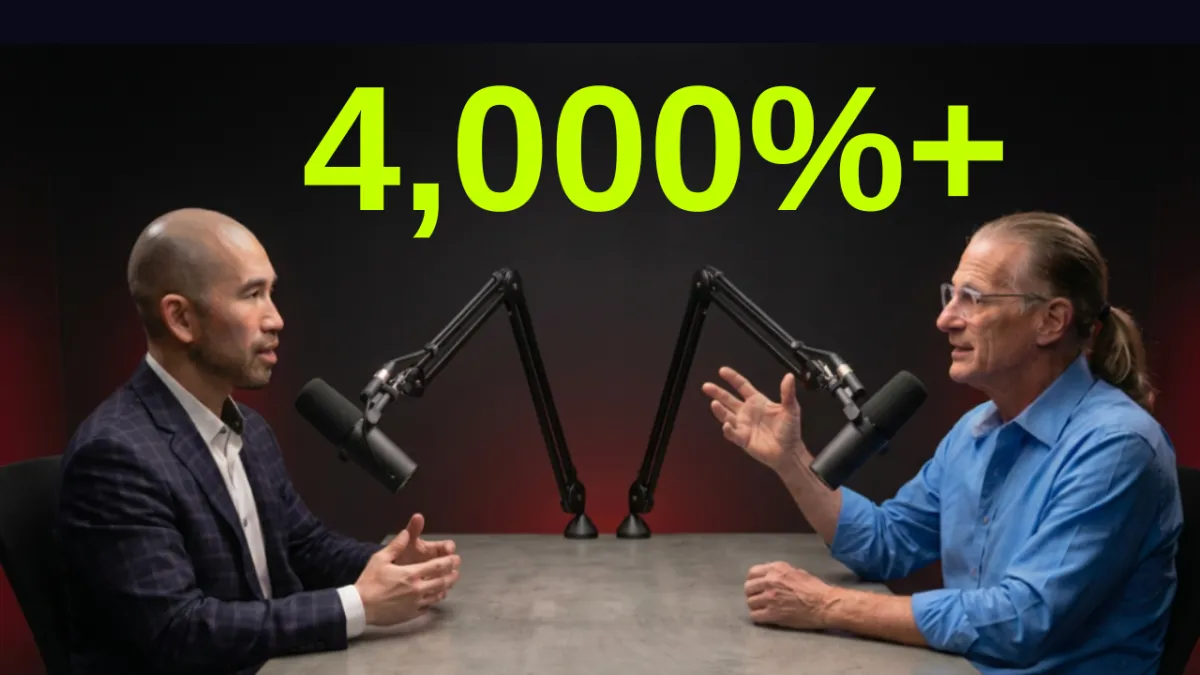
How to Scale a Sales Organization: The Leverage Playbook Behind 4,000% Growth
TL;DR: Scaling a sales organization is not about adding headcount until the number goes up. Darrin Nelson has built multiple businesses into IBM's largest software resellers by engineering leverage: finding who else profits when he wins, then getting them to carry part of the growth. This playbook breaks down his system for leverage, market selection, and the change management that makes it stick.
When Darrin Nelson talks about scaling revenue, he sounds less like a sales leader and more like an engineer describing a system. That is because he is one. Before he sold anything, he wrote assembler code in IBM's mainframe labs and debugged in hex. On this episode of The Revenue Vault, he broke down how that engineer's mindset let him grow one business 4,000% in four years, build companies into IBM's largest software resellers on the planet, and turn about 100 partner prospects into more than 19,000 in a single year. Here is the playbook.
What does it mean to scale a sales organization with leverage?
Leverage, in Darrin's definition, is one question asked on repeat: who else benefits from your success? A sales team has a hard ceiling. Every rep has 24 hours. You can hire more people, but headcount alone grows cost as fast as it grows revenue. Leverage is finding the partners, vendors, and ecosystem players who make money when you make money, then building programs that pull their motion into yours.
"Selling, like it or not, is a people business," Darrin said. "I could only accomplish so much with the sellers I was bringing on. I had to figure out leverage."
Why doesn't hiring more reps scale a sales team?
Because the entire growth burden still sits on your team, and your team caps out. Darrin's turn came at a value-added reseller called SCS Strategic Computer Solutions. He realized that if he helped IBM's own software sellers hit their numbers, they would bring his team into accounts his reps would never have reached. Then he went a step further and aligned with OEM leadership on their objectives, so they invested in him while he invested in them.
The result: 4,000% growth in four years, and IBM's largest software reseller on the East Coast. Sirius Computer Solutions acquired the business, Darrin ran the same play, and it quintupled in six years to become IBM's largest software reseller on the planet by more than two times the nearest competitor. He then extended the model to other vendors. Cisco security tripled in 18 months, moved from the fifth-ranked OEM in the portfolio to number one, and turned into a billion-dollar reseller relationship and a partner-of-the-year award.
"If you can figure out that equation of leverage, who else benefits from your success, you can drive accelerated growth where the burden of that growth is not entirely on you."
How do you find leverage in your partner ecosystem?
Darrin's approach follows a repeatable pattern. Identify which partners or vendors are strategic to the outcomes your customers are trying to reach. Sit down with them and discuss what he calls the art of the possible. Show them a clear path to their own objectives that you help deliver. Then structure mutual investment, so both sides have skin in the game. The growth does not have to come off your own budget. Much of Darrin's came from others in the ecosystem who had aligned interests in his success.
Why does hunting in the wrong market cap your growth?
After Sirius sold to CDW in 2022, Darrin went back to IBM to lead North American new-partner recruitment. He found a team hunting for new partners in the CRN 500 and at IBM's own events, rooms already full of IBM employees and existing IBM partners.
"That would be like me looking for a spouse at a family reunion," he said.
So he changed the target. Who could actually move the business? Startups. Hyperscaler systems integrators migrating thousands of workloads to hybrid and public cloud every year. Then he hunted where those buyers actually live: AWS re:Invent, MSP conferences, stages his old team never stood on. His active pursuit list went from about 100 partner prospects to more than 19,000. The team finished the first half of 2025 at 578% of its full-year number and closed the largest WatsonX AI deal in IBM history.
The lesson: define your real target demographic, then hunt in their habitat and speak their language. As Darrin puts it, "Complacency is nothing more than the early stage of irrelevance."
How do you separate selling from delivery to grow faster?
Early in his career, a scrappy IBM seller gave Darrin a line he never forgot: "Don't confuse selling with installing. We are selling right now. Installing is someone else's problem." For years Darrin carried delivery responsibility too, and that empathy quietly braked how hard he pushed the top line. When Sirius moved his delivery team into a separate services org, it removed the brake.
His rule after that: set honest customer expectations, then let the delivery organization solve for capacity. "If the team is not uncomfortable, you're not pushing hard enough." This works when there is a real delivery plan behind it. The point is not to over-promise. It is to stop letting capacity fear set the ceiling on revenue.
How do you get leadership and finance to fund an unorthodox bet?
Two things have to be true. You need real backing from leadership, and you need to earn buy-in as a servant leader rather than dictate.
Trust is earned, not given. Darrin's advice is to start with a single, not a swing for the fences. Show a win, and success compounds into permission for bigger bets. He tells the story of a CFO whose default greeting was "the answer is no, what's the question?" Darrin earned that relationship by returning 20 to 30 times the EBITDA on the investments he asked for. He also brought a written case every time: what he was asking for, how he would invest it, the expected result, and a way for finance to inspect progress.
On the servant-leadership side, he does not walk in with the answer. He finds the smartest stakeholders, lets them help identify the growth inhibitors, and lets them help craft the path forward, so they own the journey and the pivots along the way.
How do you remove the comp silos that quietly kill cross-sell?
At one company, Darrin's cybersecurity team was crushing it, and Microsoft finally shipped security tools good enough to upsell into the company's Microsoft base. The security leader fought it, because his team was not paid on Microsoft security and the revenue would flow to a different group. The behavior made sense, and it cost the customer a better outcome.
The fix is to pay people for the outcomes they influence, even across silos, rather than compensating narrow silos that fight each other. Darrin frames it as the difference between an I-shaped leader who is deep in one lane and a T-shaped leader who is deep in one lane and sees the whole board. Design comp so cross-sell and upsell get rewarded, and the internal contention goes away.
Key takeaways
Ask "who else benefits from my success," then build programs around those partners so growth is not all on your reps.
Define your real buyer, then hunt in their habitat instead of the rooms you already know.
Separate selling from delivery so capacity fear does not cap the top line.
Earn trust with singles before you swing for the fences, and bring finance a written case with a way to inspect it.
Pay people for the outcomes they influence, not just their silo.
FAQ
What is sales leverage?
Sales leverage is growth that does not rest entirely on your own headcount. You find the partners, vendors, and ecosystem players who profit when you win, then build programs that pull their sales motion into yours, so part of the growth burden shifts off your team.
How did Darrin Nelson scale IBM's partner program?
He redefined the target from traditional resellers to startups and hyperscaler systems integrators, then recruited them where they gather, like AWS re:Invent and MSP conferences. Active prospects went from about 100 to more than 19,000, and the team hit 578% of its full-year number in the first half of 2025.
What does "art of the possible" mean in sales?
It means starting each day from the outcome you want and working back through every option to reach it, instead of defending what you did yesterday. Darrin's warning: complacency is the early stage of irrelevance.
How do you convince a CFO to fund a growth bet?
Start small, prove a return, and let trust compound. Bring a written case that shows what you are asking for, how you will invest it, the expected return, and how finance can inspect progress. Darrin earned repeat funding by returning 20 to 30 times the EBITDA on his asks.
A revenue leak is a deal you should be winning that quietly slips, money already in your pipeline that never closes. Book a free Revenue Strategy Call. We'll look at where the number still runs through you and, if we can help, show you how. Either way you'll leave with something you can use.