


The Revenue Leaks Your CRM Can't See (And the $225,000 Hiding in Every Win-Rate Point)
A VP of Sales walked into a call last year ready to cut two of her AEs. Her 15-person team was forecasting $2.5M a quarter and closing $1.9M, quarter after quarter. The forecast kept missing, so the reps looked like the problem.
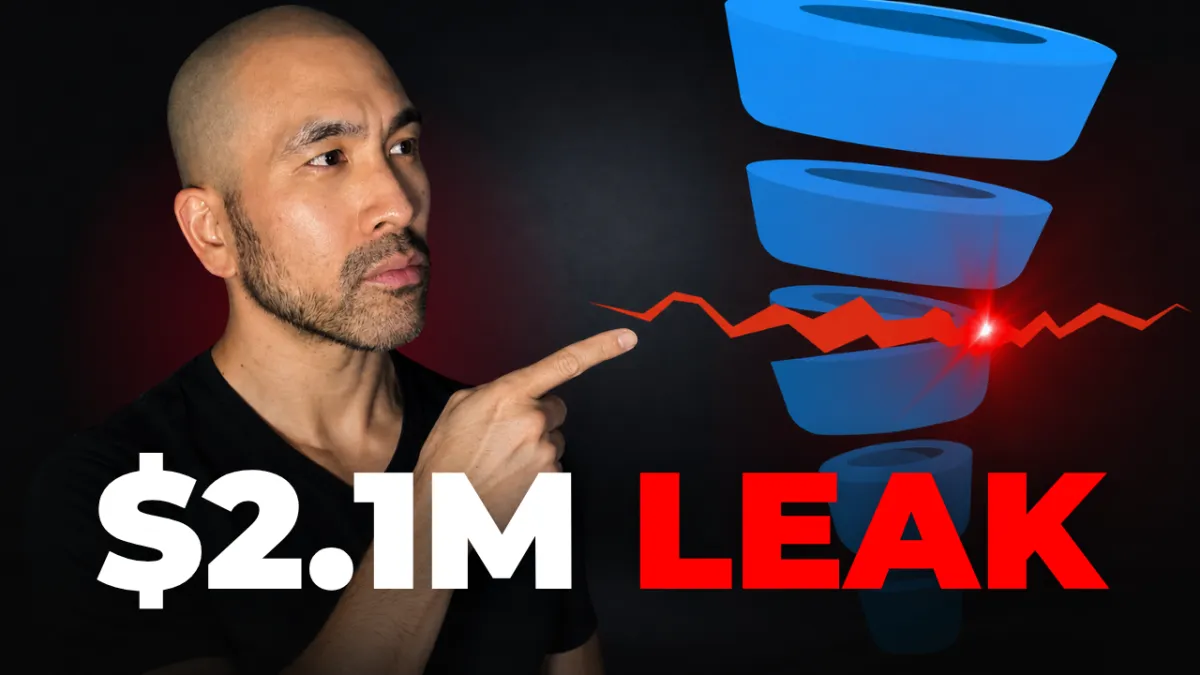
One question changed the conversation. "Can you show me your stage conversion data?" Twenty minutes later, we had found $2.1M leaking out of her pipeline. The reps were fine. The system they were selling inside was broken. One of the two AEs she was about to cut hit 140% of quota the next quarter, once the system was fixed. Same rep, different system.
That gap has a name. A revenue leak is a systemic gap in your sales process that causes deals you should win to stall, shrink, or die. It lives in the process. It shows up in your conversion data, and it stays invisible on your CRM dashboard. After more than 700 diagnostics, the same five leaks come up over and over: qualification, discovery, stakeholder mapping, deal hygiene, and ramp.
It is a process problem, not a people problem
When the number misses, the instinct is people. My reps need better training. I need better reps. Both answers are about people, and both are wrong.
No amount of training fixes a broken process. No amount of hiring fixes it either. Hiring into a broken process makes it worse, because new reps inherit the same invisible mistakes. The cycle looks like this: reps miss quota, you hire more reps, ramp takes 6 to 14 months, they miss quota, they quit, you start over. Every loop, the leaks get worse, because you are cycling people through a broken system faster.
HubSpot's research says 85 to 90% of sales training has zero lasting impact after 120 days. Every one of those programs skipped the first step. Nobody diagnosed the leak before prescribing the fix. You cannot fix what you have not diagnosed.
Your biggest leaks are invisible in your CRM
Most leaders assume that if there were a problem, the CRM would show it. The CRM shows activity: meetings booked, opportunities created, pipeline value. Leaks show up somewhere else, in conversion, stage by stage.
86% of B2B purchases stall. 70% of lost complex deals are single-threaded. Neither number appears on a CRM dashboard. The same is true for velocity. The industry average from first meeting to closed won is 84 days, and more than 230 days on deals over $200,000. If your numbers run longer, you have a velocity leak: discovery is shallow, stakeholder mapping comes too late. Both are process fixes.
Ramp is the most expensive version of this. The average new AE takes 9 to 14 months to hit full quota. Above nine months, you are paying full salary for half output. The best teams ramp in under seven months. One fintech client went from 14 months to six. An HR tech client lifted deal velocity by 65%. A documented, repeatable process is what makes that happen.
Five leaks, three layers
Most training only fixes the rep layer. Most organizations have three layers, and a leak can live in any of them.
At the rep layer, five pillars matter, and the first two hold about 80% of the leaks. Qualification: 86% of B2B purchases stall, which means a pipeline that looks full is actually stuck. Top teams disqualify 30 to 40% of deals by stage two on purpose, because a clean pipeline converts. Discovery depth: 74% of buyer indecision comes from fear of failure rather than budget or timing. If your rep cannot put a dollar figure on doing nothing, the deal stalls and dies. Below a 60% discovery-to-proposal conversion rate, that is almost always the leak. The other three pillars are stakeholder mapping, deal hygiene, and ramp.
The manager layer is the one most leaders miss. The manager is the multiplier. A good one turns a B player into an A player. A bad one turns an A player into a B-minus and drives them to quit. Most rep leaks are really manager leaks.
The VP layer is where the structural leaks live: org design, territories, the revenue motion, forecasting, the systems and rhythms that hold it together. When the VP layer is broken, no amount of rep or manager work saves the year. These leaks cost a million to five million dollars a year, sometimes more.
The math: every point is worth $225,000
Here is a calculation you can run Monday morning. Team size, times opportunities per rep, times deal size, times win rate.
Take 15 reps, each running 30 qualified opportunities a year, at a $50,000 average deal and a 21% win rate. That is $4.725M. Move the win rate to 24% and hold everything else constant, and the number becomes $5.4M. Those three points are worth an extra $675,000. Every single win-rate point is worth about $225,000.
So the real question is how much you are spending to move that number. Most leaders are well into six figures on training, tools, and new hires, and the win rate has not moved in three quarters. That is the leak.
What it looks like fixed
Bruno Lecocq runs BEMO, an eight-figure cybersecurity company in Seattle. His win rate sat at 5 to 8%, his average deal at $19,000, and his board kept asking when the company would move up market. The team was good. The system was broken.
The diagnosis crossed all three layers: loose qualification, shallow discovery, and single-threaded deals at the rep layer, reactive coaching at the manager layer. Three coordinated fixes, installed over six to ten weeks. The win rate moved to 20 to 25%. The deal size moved from $19,000 to $150,000 in six months. They closed a record $1.2M deal, 60 times where they started. Their 2026 target was $1.4M, and they hit it in February. The board raised it to $1.7M, and they hit that by April. Same reps, same market. The system was the only variable.
FAQ
What is a revenue leak?
A systemic gap in your sales process that causes winnable deals to stall, shrink, or die. It sits in the process, shows up in conversion data, and stays invisible on a CRM dashboard.
Why doesn't more training fix it?
Training without diagnosis is guessing. If you have not named the specific leak, you are prescribing a fix for a problem you have not identified. HubSpot's data: 85 to 90% of training has no lasting impact past 120 days.
Where do most leaks live?
Qualification and discovery hold about 80% of rep-layer leaks. Leaks also live at the manager and VP layers, and most orgs have them on all three.
How do you find them?
Conversion data, stage by stage, benchmarked against the top 10%. The discovery-to-close win rate, deal velocity, and ramp time each point to a specific leak.
Bottom Line
The top 10% win with the reps and budget they already have. The difference is diagnosis. They find the root cause and solve for it, the way an elite doctor diagnoses before prescribing.
If you want an outside read on where your pipeline is leaking and what each leak costs, book a free Executive Revenue Snapshot below.
To go deeper, watch the full Boardroom session embedded at the top of this post.


