

Why Sales Training Fails (And the System That Replaces It)
Most sales leaders have a training graveyard. A methodology you paid for last year. A binder nobody opens. A framework your reps used hard for three weeks, then quietly dropped.
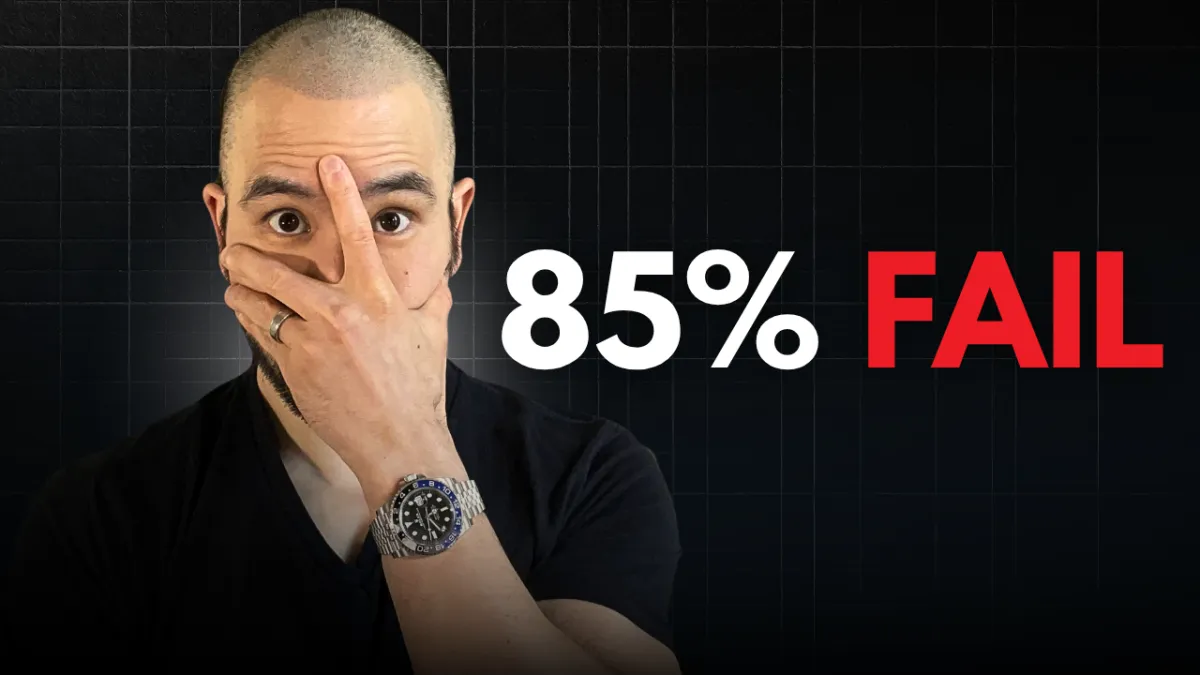
The data backs up the feeling. Roughly 85% of sales training is forgotten within 120 days. That spend did not buy behavior change. It bought a good afternoon and a sugar high that wore off by the next quarter.
Across 700+ sales teams, I have watched the same movie. The training was rarely the problem. The model was. Training is an event. Behavior change is a system. This article breaks down why training fails, and the four-component system that replaces it. It is the same approach behind $950M+ in client revenue.
What is the real reason sales training fails?
Sales training fails because it delivers knowledge without reinforcement. A workshop teaches a framework in a few hours. Behavior only changes when managers coach that framework on real deals, every week. Without that loop, reps drift back to old habits inside 120 days.
Think about how a typical rollout goes. Day one is an all-hands workshop and the reps are fired up. By week two, an odd deal shows up and they wing it. By week four, they cannot remember what the acronym stood for. Nothing reinforced the new behavior, so the old behavior won. Knowledge faded. Habits returned. The invoice stayed paid.
Why does new behavior fade so fast after a workshop?
Because a workshop teaches your team what to do, not how to keep doing it under pressure. Knowledge is cheap. Repetition is expensive. And repetition is the only thing that rewires a habit on a live deal.
I saw this with a fintech client. Their new AEs were taking 14 months to ramp. They had bought outside training twice, and both times the lift evaporated within a quarter. We stopped buying events and installed a system instead. Ramp time dropped from 14 months to 6. Same reps. Same product. A different operating model. The training was never the issue. The lack of reinforcement was.
Why are your managers the real missing link?
Here is the part most vendors will not tell you. Your managers are the difference between training that sticks and training that evaporates. In most rollouts, the trainer teaches the reps while the managers sit in the same room learning the same thing at the same time. So when a rep gets stuck applying the framework, they ask a manager who knows exactly as much as they do. Nothing.
Behavior change requires manager coaching on real deals. Not a feelings chat. Real coaching, on a live opportunity, against the framework. Your managers need to learn the system first, deeper than the reps, and they need to learn how to coach it, not just how to run it.
One $40M HR tech client made one change. They trained managers first and built coaching into the weekly rhythm. Win rate climbed to 47%. Same market. Same product. Coached behavior beat trained knowledge, and it held quarter after quarter.
What should you install instead of sales training?
Replace the event with a system. Four components do the work.
First, a discovery framework built for your deals. Not generic theory. Specific to your deal size and buying process. I use POWERFUL with clients: Problem, Overview, Why change, Economic impact, Roadmap, Feasibility, Understand competition, Loss of status quo. It runs in about 10 minutes and fits $50K to $500K deals. Your framework can differ. It just has to fit your world, not a textbook.
Second, a manager coaching cadence. Thirty minutes per rep, every week, on one real deal. The manager coaches the rep through the framework on that specific opportunity. This is the component that took that fintech AE from a 14-month ramp to 6 months.
Third, stage exit criteria. Every pipeline stage gets checkpoints, and a deal cannot advance until it hits them. Discovery needs three stakeholders, an economic buyer, and a confirmed timeline. Proposal needs value quantified, the decision process mapped, and competition handled. Without exit criteria, deals advance on hope. With them, deals advance on facts.
Fourth, a real-time dashboard. Managers see the pipeline daily and see which deals hit their checkpoints. That visibility makes the weekly coaching sharper and the forecast honest. Put all four together and you have a system. A $40M HR tech team that installed this saw deal velocity jump 65%.
How long until a sales system actually shows results?
Faster than most leaders expect, and it lasts. When the four components are in place, win rate typically moves 5 to 15 points. Sales cycles compress. Forecast accuracy goes from a guess to a number you trust. Because it is a system rather than an event, the lift holds instead of fading at the 120-day mark.
The reason is simple. A system changes what happens every week, not just what happened on one Tuesday. Weekly coaching, enforced checkpoints, and daily visibility keep the new behavior alive long after the excitement of a workshop wears off. That is the whole game.
Frequently asked questions
How much does failed sales training really cost?
More than the invoice. You pay for the program, then you pay again in flat win rates, blown forecasts, and reps reverting to old habits. Across 700+ teams, the biggest cost was almost always the lost quarter, not the line item.
Is the problem MEDDIC or Sandler?
Usually not. Most named methodologies are sound. They fail because they are taught as an event and never reinforced by managers on real deals. The delivery model breaks, not the framework.
How do I get managers to coach every week?
Make it a non-negotiable cadence with a simple structure. One rep, one real deal, 30 minutes, framework applied. A real-time dashboard makes it easy to pick the deal that needs coaching most.
Does this work for smaller teams?
Yes. The four components scale down cleanly. A five-rep team with weekly coaching and clear exit criteria will out-execute a 50-rep team running on hope.
What is the fastest first step?
Find out which of the four components is weakest on your team before you spend another dollar on training. Book a free working session with our team to get our help.


