
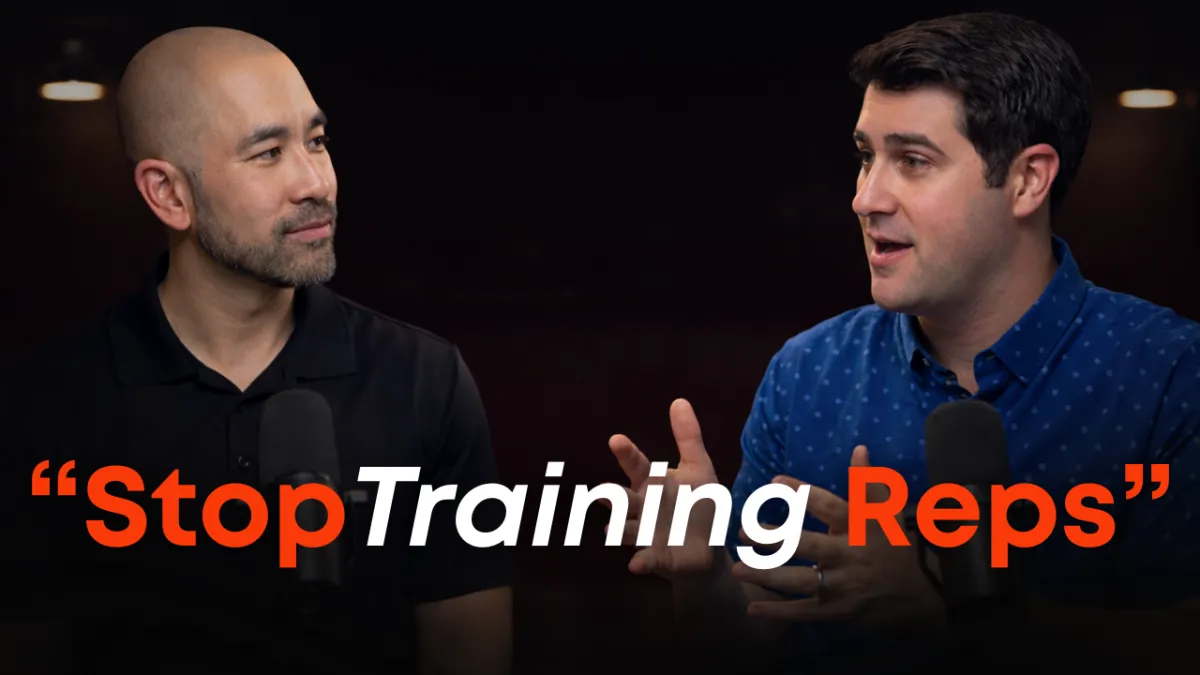
Ex-LinkedIn Exec: Stop Training Reps. Enable Managers Instead.
"If I told you to double revenue in 12 months with no new headcount and no budget, what would you do?"
Dan McLennan, VP of Sales at AppFolio and former LinkedIn executive, didn't hesitate:
"Manager enablement. Period. Not rep training. Enable the frontline managers."
Why?
Because frontline managers touch everything. They diagnose talent, coach to outcomes, help middle performers become top performers.
One manager multiplies across 8 to 10 reps.
Most orgs train reps but leave managers guessing.
Dan joined me on The Revenue Vault to break down why manager enablement is the highest-leverage growth lever, the discovery that most managers don't know what good looks like, and how to diagnose what's broken before AI amplifies it.
The discovery: managers don't know what good looks like
When Dan unified sales, CS, ops, and SDRs under one roof at a previous company, he saw something shocking.
"Reps didn't know what good looked like. But the managers ALSO didn't know what good looked like."
He watched managers run one-on-ones, deal reviews, team meetings. Totally different approaches. Wildly different outcomes.
The top manager's team crushed quota. The bottom manager's team struggled.
Same playbook. Same ICP. Same product.
The difference? The manager.
"One of the unintended outcomes of just saying 'have your one-on-ones and team meetings' is that people run rogue and do things very differently."
So Dan built a new onboarding program for managers. Changed how he personally coached them. Standardized what good looks like.
Results improved without touching the reps.
Manager enablement is the multiplier
Dan's philosophy: "The most important aspect of growing a business in the sales organization is the effectiveness of the frontline managers."
Not the reps. The managers.
Why? Because managers coach reps to the outcomes you want. They diagnose talent. They help middle performers become top performers.
And if you want to double revenue without doubling headcount, you can't just grind reps harder.
You enable managers better.
"I would double down on manager enablement to make sure they're coaching their reps to the inputs and outputs we want. That's the one thing I would do most."
We've validated this with dozens of organizations. Sometimes the gap isn't the reps. It's the frontline leaders.
The walk-on mentality: hard work beats talent
Dan was a walk-on tight end at Stanford. Six foot seven, competing against five-star recruits with scholarships.
He wasn't the most talented, fastest, or strongest.
His secret? Hard work. Grit. Knowing his role. "I wasn't the MVP. But I had a role to play, whether that was on the scout team or getting our defensive ends ready for USC."
That mentality carried into his career. At LinkedIn, he got promoted multiple times. Led teams to President's Club. Broke records.
But every January 1st? Clean slate.
"I feel like I have to reprove myself. What we did last year only gets us so far."
AI amplifies what's broken (diagnose first)
Dan warns: "AI amplifies whatever's working or not working for your sales team."
Early AI prospecting tools in 2023? They hallucinated. One sent a message: "I'd love to meet you on the beach."
Awkward.
Dan's rule: start with what already works. Identify templates that convert. Set guardrails for what AI can't say.
"If you have really bad email templates and they're not successful, don't just ask AI to make them better. It'll probably make them worse."
Where AI shines: meeting prep.
Dan used to spend 10 to 12 hours researching tier-one accounts. Now? AI does it in one hour.
You can normalize prep time across all accounts... tier one or tier three.
Compassionate leadership with underperformers
Dan's approach to underperformers: lead with compassion.
But here's the twist: "The most compassionate thing you can do for a bottom performer isn't to give them one more deal review. They might need to find out if they're in the right role."
Set clear expectations. Provide coaching. Give them 90 to 120 days.
If it's not working? Help them find a better fit.
"The least compassionate thing you can do is leave them suffering, missing quota, stressed, can't sleep. The most compassionate thing is to help them see another path."
Sometimes that's a different function. Sometimes a different company.
Leaving them to suffer? That's not compassion. That's negligence.
DISCLAIMER: The views and opinions shared here their solely my own.



Mail
Facebook
LinkedIn
X
Pinterest
Snapchat
Reddit