
Why Sales Teams Keep Missing Quota (It Is Not What Most Leaders Think)
I have audited over 100 sales organizations. In almost every single one, quota attainment is down. And in almost every single one, the leader's first instinct is the same.
Blame the reps.
Wrong diagnosis. Wrong fix. Same result next quarter.
The real reason why sales teams miss quota is not talent. It is not motivation. It is not the market. It is a systems and leadership failure that most organizations are not willing to look at directly.
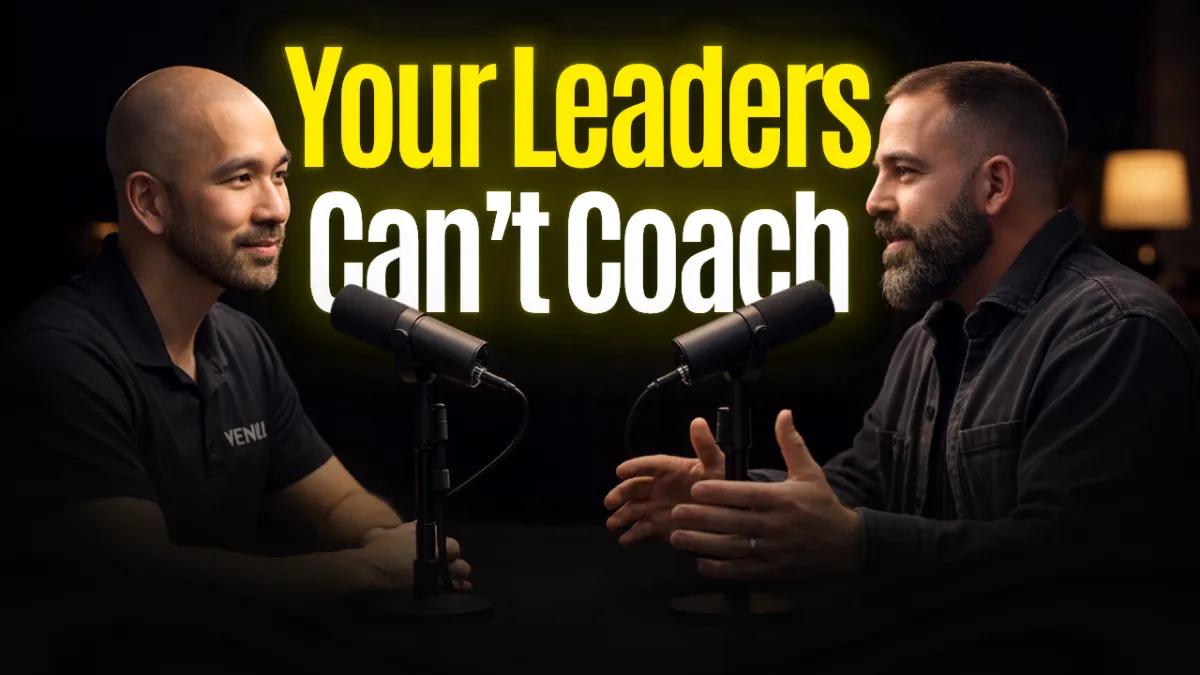
In a recent conversation with Rich Patterson, an 8-figure VP of Sales with 20 years of experience across direct sales, SaaS, and logistics, we broke down exactly where the breakdown happens and what it actually takes to fix it.
Here is what we found.
What Is Sales Quota Attainment?
Sales quota attainment is the percentage of reps on a team who hit or exceed their assigned revenue target in a given period. It is the single most watched number in any sales organization.
Most leaders track it as a number. The ones who actually fix it treat it as a symptom.
The Real Reason Quota Attainment Is Down (And It Is Not the Market)
There are three root causes showing up consistently across the organizations I work with. None of them are the reps.
1. Reps are being onboarded into chaos.
Most onboarding programs are not programs. They are a product overview, a few shadowing sessions, and a hope that the new hire figures it out.
I want every single hour pre-planned for a new hire's first 90 days. Not to micromanage them. To give them the clearest possible blueprint for success from day one. Because here is the reality: just because someone came from a large Fortune 500 company does not mean they were set up to succeed there. They might have won because of the environment, not because of who they are.
If you do not build the system that produces results, you will keep blaming the person who could not navigate the chaos.
2. Leaders were promoted because they could sell, not because they could develop people.
This is the one nobody wants to say out loud.
Half the time we work with organizations, the reps need work. But we work with the leaders first. Because most of the leaders are not equipped to grow and scale a sales organization. They cannot coach effectively. They cannot hire to a profile. They cannot build the operating rhythms that catch problems in 30 days instead of six months.
You end up with the blind leading the blind. Leaders who lack the skills managing reps who lack the skills. And the quota number just keeps missing quarter after quarter while everyone looks for someone else to blame.
3. The skills required to sell today are not the skills most reps were trained on.
Rich made a point in our conversation that I think about a lot. 67% of modern buyers show up to a sales conversation already well prepared. They have done the research. They know the competitors. They know the pricing ranges.
What they do not want is an order taker. What they cannot be sold by is surface level discovery and a deck.
The reps who grew up selling in a hot market, when cash was flush and product was cool and shiny, never had to develop the skills to sell in a real market. They were shooting fish in a barrel. Now the barrel is gone and they do not know how to fish.
The skills required to convert a modern buyer, asking deep transformational questions, converting latent pain to active pain across multiple stakeholders, building buying consensus, are not one skill. They are a set of skills that most reps do not have and most leaders cannot teach.
Are you a CRO or VP of Sales with a 5-25 person B2B sales team?
Find out your top 3 revenue leaks in a free 45-minute Executive Snapshot. Walk away with a 1-page memo you can send to your CEO or board, or we pay your hourly rate.
Book your free Executive Snapshot here.
The 157-Day Problem Nobody Is Talking About
Here is the math most sales leaders are not running.
Take a 10-rep team. Average annual churn of 30%. That means you are hiring 3 new reps every single year just to stay flat. Now add in ramp time. In most organizations I have worked with, it takes 157 days from the moment a requisition opens to the moment that rep closes their first deal.
157 days. Per rep. Three reps a year.
Your quota does not pause while you onboard. Your number does not go down because you have an open territory. The math runs whether you are paying attention to it or not.
And here is what makes it worse. Most leaders are not compressing that number. They are not building the system that gets a new hire productive faster. They are crossing their fingers, giving the rep a login and a Salesforce seat, and hoping for the best.
I have worked with 700 plus clients across 50 countries and helped generate over $950 million in revenue. The organizations that fix quota attainment are not the ones that hire better. They are the ones that build a factory. A repeatable system that takes whoever walks in the door and gives them the highest possible likelihood of success on the other end.
Think about McKinsey. They hire college graduates with zero business experience and charge companies millions of dollars for their work. That is not because the graduates are geniuses. It is because McKinsey has a machine. A recruitment system, an onboarding system, a development system, and a deployment system that produces a consistent output regardless of who walks in.
That is what a real sales organization looks like. And most companies are not building it.
What the Best Sales Leaders Do Differently
After 20 plus years running sales teams and working with over 100 organizations, here is what separates the leaders who fix quota attainment from the ones who keep cycling through the same problems.
They are radically transparent in the hiring process.
Rich shared something in our conversation that I think every sales leader should steal. Before he brings someone on, he walks them through the comp plan in detail. Not the OTE headline number. The actual variable. What it looks like in year one at the median. What it looks like in year two. What percentage of reps hit it last year and where they missed.
He is not trying to scare candidates off. He is trying to create alignment before day one. Because the worst thing that can happen is a rep joins your team, figures out three months in that the comp does not work the way they thought it did, and checks out. Now you have a disengaged rep, a damaged territory, and a 157-day clock starting over.
Rich put it simply: alignment is the new trust. Get it on the front end or you will pay for it on the back end.
They build a real 90-day onboarding blueprint.
Not a welcome packet. Not a product overview. An hour by hour plan for the first 90 days with specific KPIs, clear expectations, and a tight feedback loop baked in.
One of the things I required from every new hire in their first 90 days was a weekly email. Five things they learned that week and how they planned to apply them. That is it. Simple.
But what I got from those emails was extraordinary. I could see exactly what they were absorbing, where they were struggling, how much support they were getting from their manager, and what their upside looked like. All of that in 30 days. Not six months.
If you are waiting six months to know whether a new hire is going to make it, you are bleeding cash for six months. Build the system that tells you in 30 days.
They run operating rhythms that catch problems early.
The best leaders are not hands off during onboarding. They are running weekly one on ones. They are joining calls live. They are watching speed to learn to action as the early indicator of upside.
Your top 10% will succeed despite you. Rich is right about that. They are already booking meetings. They are already moving deals. They are learning rapidly and applying what they learn immediately.
But the other 90% need TLC. They need coaching. They need a leader who knows the difference between a skill problem and a will problem, and who catches that distinction in week four instead of month four.
The leaders who build those rhythms are not micromanaging. They are protecting the 157-day investment they made the moment they opened that requisition.
Frequently Asked Questions
Why is sales quota attainment declining across B2B sales teams?
Quota attainment is declining primarily because of three compounding failures: poor onboarding systems that set reps up to fail, sales leaders who were promoted for individual performance rather than their ability to develop people, and a skills gap created by reps who learned to sell in an easy market and never developed the depth required to convert modern buyers. In the organizations I audit, fixing the leader almost always has to come before fixing the rep.
How long does it take a new sales rep to become productive?
In most B2B sales organizations, it takes 157 days from the moment a requisition opens to the moment a new rep closes their first deal. On a 10-rep team with 30% annual churn, that means three reps a year are in that dead zone simultaneously. Organizations that compress that number do it through structured 90-day onboarding blueprints, tight feedback loops, and weekly operating rhythms that catch problems in 30 days instead of six months.
What is the difference between a skill problem and a will problem in sales?
A skill problem means the rep does not know how to do something. A will problem means they know how but are choosing not to. The distinction matters because the fix is completely different. Coaching solves a skill problem. A performance conversation solves a will problem. Most leaders never make this distinction clearly, which means they apply the wrong intervention and wonder why nothing changes.
How do you reduce sales rep turnover?
The highest leverage point for reducing rep turnover is radical transparency in the hiring process. Walk candidates through the actual comp plan, the median year one earnings, the year two projection, and the percentage of reps who hit quota last year. Let people disqualify themselves before they start. Misaligned expectations on comp are one of the top drivers of early attrition, and they are almost entirely preventable with the right front-end conversation.
What should a 90-day sales onboarding plan include?
A real 90-day onboarding plan should include an hour by hour schedule for the first 90 days, specific KPIs the rep needs to hit at the 30, 60, and 90 day marks, weekly one on ones with direct feedback, live call observation from the manager, and a structured reflection loop like a weekly top five learnings email. The goal is not to micromanage. The goal is to give the rep the clearest possible blueprint for success and to catch problems in week four instead of month four.
The Bottom Line
Your reps are not broken. Your sales system is.
Quota attainment does not fix itself by hiring different people into the same broken environment. It fixes by building the machine. The onboarding system. The operating rhythms. The leadership development. The hiring transparency that creates alignment before day one.
If you are a CRO or VP of Sales running a 5 to 25 person B2B team and your quota attainment has been stuck for more than one quarter, the answer is not another hire. It is a diagnosis.
We have helped 700 plus clients find and fix the revenue leaks that are keeping their numbers flat. The starting point is a free 45-minute Executive Snapshot where we surface your top three leaks and hand you a memo you can take straight to your CEO or board.
Or we pay your hourly rate.
Book your free Executive Snapshot below.


Mail
Facebook
LinkedIn
X
Pinterest
Snapchat
Reddit