
Why Distribution Is the Wrong Hurdle for Early-Stage Go-to-Market (The In-Person Playbook Behind 85% of This Start Up's Revenue)
Your pipeline is light, so you reach for reach. More cold emails. More ad spend. A bigger SDR team. The logic feels obvious. Get in front of more people and more deals follow.
Alex Montgomery has run that math three times, as the first growth hire at three different companies. His conclusion runs the other way. Distribution is the wrong hurdle.
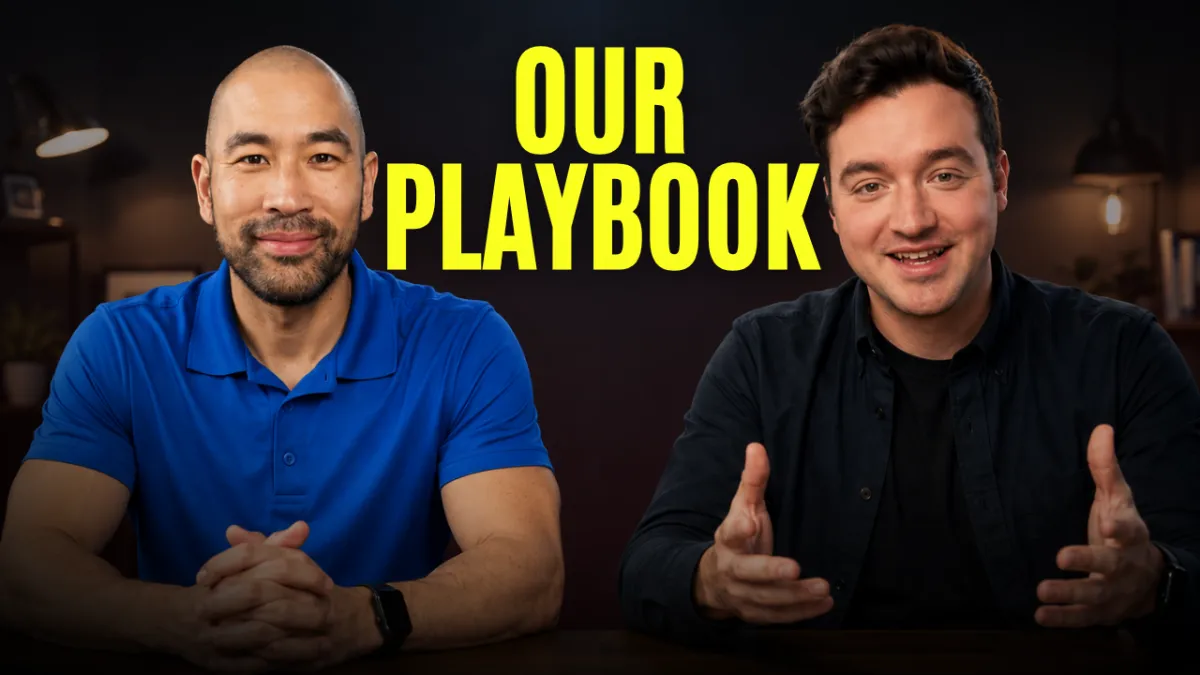
Alex is Head of GTM at SlashExperts. On The Revenue Vault, he told Marcus Chan that 85% of the company's revenue comes from in-person and referrals, with almost none from cold outbound. The real constraint is trust. And trust keeps getting harder to earn.
The trust recession makes reach worth less
Buyer trust is lower than it has ever been. Marcus calls it the trust recession, and it has been running for five-plus years. A cold email lands in an inbox and says, in effect, "Hi, I'm Alex. Bye." Stack on omission bias, where buyers avoid any decision that could look risky, and the cold channel weakens every quarter.
Here is the part most teams miss. You can put your message in front of a million people. If they do not trust you, the reach did nothing. Alex would rather get in front of fewer people with real trust. That is why in-person works. Solve trust first, and distribution gets easier on its own.
The in-person playbook that drives 85% of revenue
SlashExperts does almost no cold outbound. The growth engine is in-person: events, happy hours, and dinners. A handshake builds trust faster than a sequence ever will.
Two formats carry most of the load. Founder dinners: invite customers, prospects, and people you know. Open with a one-minute intro, then stop selling. Let the room talk to each other. Even that builds trust. Partner dinners: find a company with a similar buyer, combine guest lists, split the cost. You can stand up a lot of those quickly, and the energy is shared across both teams.
The invite is where most dinners fail. Alex frames it on two value props. The venue: a good spot, convenient, on the way home from work. That convenience is often the biggest draw. And the guest list: name who is already coming. For a New York dinner, the key guest was Varun, co-founder of Clay. "We have Varun from Clay coming" filled the room.
Structure depends on the dinner. The ones SlashExperts fully controls run casual: a quick open, then free conversation. One dinner was hosted with an investor who has run 200-plus dinners and works the room with structured questions throughout. That works because he has the reps. Most people should keep it casual.
Velocity to revenue: the first 30 days
When Alex joins a company, he runs an order of operations built on velocity to revenue. Day one at SlashExperts, founder Brayden Young sent 60 to 100 intros and filled the calendar. Prospects, investors, partners, and customers, all mixed together. Alex level-set on each call and got his reps in fast.
The sequence is simple. Work the close-lost list. Work the founder's network. Work your own network. Maximize what is already working before you build anything new. In the first year of a company, the job is to attack the channel that already converts. Building a full outbound function with a full tool stack can wait, and it burns cash to prove out too early.
Speed compounds when something catches. Inside that first 30 days, a customer posted on LinkedIn about a SlashExperts-powered experience. The post did not even name the company, which made it read as organic. Alex commented on and messaged every single person in the thread. It booked around 15 demos in two days and drove a wave of direct traffic.
Marcus sees the cost of skipping the order of operations. One CEO had Claude scan the inbound lead flow and found that 30%-plus of opportunities from the last 30 days had no follow-up at all. Hundreds of thousands of dollars, sitting there. Before you buy more reach, find out what your current pipeline is leaking.
The playbook never transfers, so get your hands dirty
Alex has done zero-to-one three times, and the playbook was different every time. The first run leaned on Instantly, Smartlead, and Clay. It worked until it did not, and it did not carry to the next company. As he put it, everybody has a plan until they get punched in the face.
That is why the best early hires get their hands dirty. Some days Alex is the SDR, some days the marketer, some days the event host. The operators who refuse to get in the weeds are usually the ones carrying the same playbook into every job. Hire for the opposite: people who have lived in seed, A, or B stage, who stay scrappy, and who fail enough times to find what wins.
There is a sizing lesson here too. The Oracle and Salesforce outbound playbooks work when you sell to Google or Disney, because those buyers expect that motion. When you sell to everyone else, you have to stand out, which means doing something different. For SlashExperts, different is in-person, and a small team can run that faster than a big org buried in approvals.
FAQ
Why is distribution the wrong hurdle for early-stage GTM?
Reach only works if the audience trusts you. In the trust recession, cold channels convert worse every year. Getting in front of fewer people with real trust beats blasting a message to a list that has no reason to believe you.
What is the in-person playbook?
Founder dinners and partner dinners, plus events and happy hours. Frame the invite on the venue and the guest list. Open with a short intro, then let the room connect. It builds trust faster than any sequence.
What should a new growth leader do in the first 30 days?
Run the velocity-to-revenue order of operations: close-lost list, founder's network, your own network. Maximize what already converts before building a new outbound function.
Why does the same playbook fail at the next company?
Stage, product, industry, and buyers all change. The channel that carried one company often does not carry the next. The skill that transfers is the ability to adapt fast.
Bottom Line
Distribution is easy to measure, so it gets the attention. Trust is harder to build and harder to attribute, so it gets neglected. It is still the constraint. SlashExperts solved for it with in-person motion, then productized it with Carly, an AI agent that delivers the right social proof at the right moment. The lesson holds even if you never throw a dinner. Earn trust first, and reach starts to pay.
If you want an outside read on where your pipeline is leaking before you spend on more reach, book a free Executive Snapshot below.
For the full conversation with Alex Montgomery, watch the episode embedded at the top of this post.


Mail
Facebook
LinkedIn
X
Pinterest
Snapchat
Reddit