


How to Build a Personal Brand as a Founder Without Becoming an Influencer
Most owners I talk to file personal branding under vanity. Something influencers do. Something with no connection to whether the sales team hits the number.
Then I ask one question. When a prospect gets your rep's calendar invite, what is the first thing they do?
They look you up.
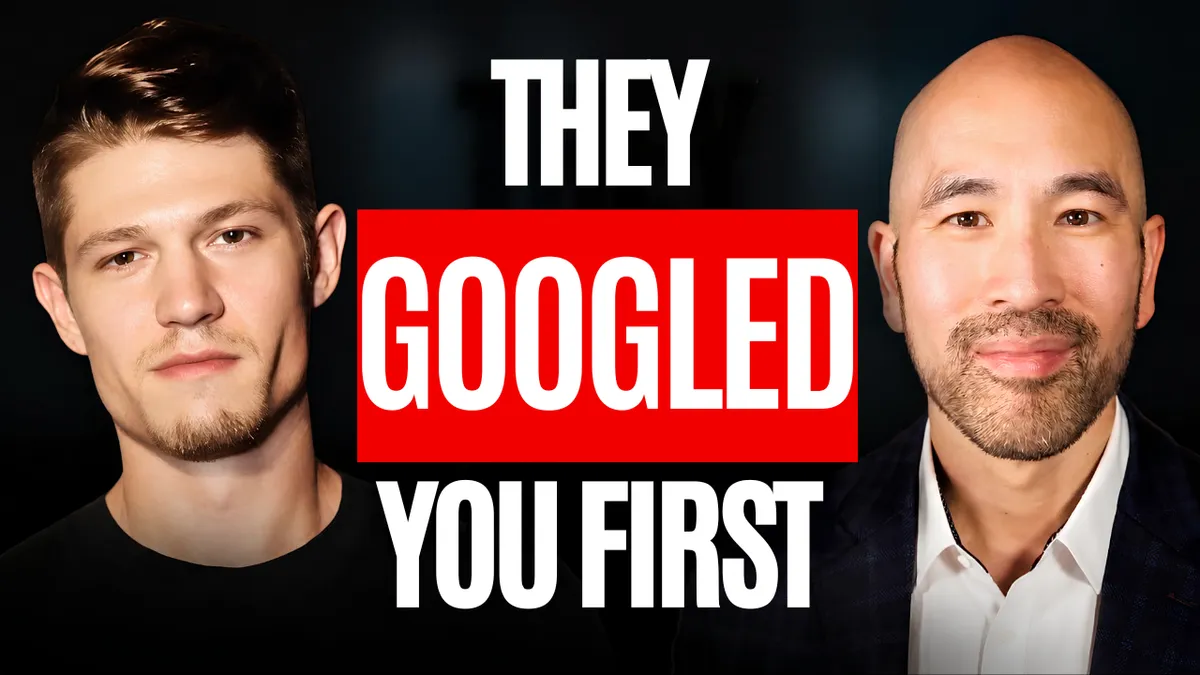
What they find in the next two minutes decides whether your rep walks into a conversation or an interrogation. Carey James has built a career on that gap. He is co-founder of Brand Alchemy, and before that he spent years turning research scientists into names people trust. He joined me on The Revenue Vault to break down what actually moves the needle for a founder who has no interest in being famous.
Why do some sales calls feel easy and others feel like a fight?
Carey has sold on both sides of this, which is what makes his answer useful.
He spent part of his career closing high-ticket offers for other people. Some of those people were unknown. Some had real reputations. Same rep, same script, same price band.
When he sold for the unknown ones, the calls were a grind. When he sold for someone respected, the prospect showed up ready to go.
His line: that deal was closed before you even got on the call.
I lived the same thing. Year one of this business, nobody knew who I was and nobody cared about the offer. So I did somewhere around 200 podcast interviews that year and went just as hard on LinkedIn. By year two those same calls were dramatically easier. Today we get people on calls who have read the book, watched hundreds of hours of interviews, and followed the podcast for seven years. My team's job on those calls is to not mess it up.
That is the real ROI. Not follower count. How much work your reps have to do to earn trust that should already exist.
What is “label in the bottle” syndrome?
This is Carey's term and it explains why most owners cannot build their own brand.
You live inside your identity every day. You breathe it. So you are blind to it. You cannot read the label because you are the bottle.
The things that make you genuinely different are invisible to you, because to you they are just Tuesday. The war story you tell without thinking. The thing you notice in a deal that nobody else notices. The reason your best clients actually refer you.
You cannot see any of it. Which is why most founders, when they sit down to write about themselves, produce something generic and lifeless.
How do you find out what you are actually known for?
Carey's fix is a phone exercise, and it takes an afternoon.
Go to ten people around you. Clients, team, peers, family. Ask them two questions.
How have I changed the way you think about the world? How have I made you think about a business problem differently?
Then shut up and write down what they say.
He told me about a client who runs one of the fastest-growing insurance agencies in California. She works with her sister. For years she had assumed her sister saw her as Godzilla. Aggressive, hard-charging, a bit of a monster.
She ran the exercise. Her sister described her as a unicorn. A magical creature who walks into rooms and makes improbable deals happen.
That single word changed how she showed up. She stopped apologizing for being assertive and started owning it. It became part of how she talked about herself on stage.
The answers people give you are almost never the ones you expect. That is the point.
Why do founders resist building a brand?
Carey says getting past this resistance is roughly ninety percent of his job, and the hardest cases are the credentialed ones. Doctors. Scientists. Lawyers. People from conservative professions who believe the work should speak for itself.
His counter is that they already have a personal brand. When a patient tells a friend to go see a particular surgeon, that is a personal brand. That is a reputation doing exactly what reputations have always done.
He traces it back further than that. For most of human history we lived in groups of a hundred or two hundred people, and your standing in that group came from your contribution to it. Business, resources, marriage, all of it ran on reputation. That machinery is still running. The group is just eight billion people now.
The fear underneath the resistance is not really about effort. It is about looking like a fraud. Owners picture themselves doing a dance on TikTok and decide the whole thing is beneath them.
That is not the assignment. The assignment is getting the version of you that already exists in client meetings in front of more people.
What is a “niche of one”?
Carey credits this framing to something Alex Hormozi said on Diary of a CEO, and it is the most freeing idea in the episode.
If you are a fitness coach, you will never be the most jacked. Someone is always more shredded. You will never be the smartest either. Someone always has more letters after their name and reads more research.
But nobody else gets to be you.
So the nerd who films every video with his dog wins. The woman who cooks her own food in the countryside wins. The guy who goes down strange rabbit holes nobody else finds interesting wins.
Carey calls it your niche of one. The category only you can occupy.
For a founder-led B2B company this is more concrete than it sounds. You are not competing with every consultant on the internet. You are the person who ran operations for twenty-two years before starting this, who has a specific opinion about why most implementations fail, and who says it in a way nobody else does.
Figure out what that is. Then say it loudly and often.
Do you need followers to start?
No, and this is the part most owners have not caught up on.
Carey's framing is that social media died somewhere around 2022 and 2023. What replaced it is interest media. The old model showed you your friends. The new model shows you your interests.
The practical consequence is large. You can open a brand new account today with zero followers, post about cybersecurity or logistics software or whatever you actually do, and the algorithm will push it to people who care about that subject. Engineers. Operators. Buyers.
Five years ago you had to buy or grind your way to an audience before anyone saw your work. That gate is gone.
It also means you can test in private. If you are nervous about posting from your own name, start an unbranded account and find out what actually lands before you attach your face to it.
How much time does this actually take?
The second big objection Carey hears is time. Owners assume ten hours a week and a bad result at the end of it.
His answer is one recorded conversation. One hour, weekly or every other week. That single hour becomes a month of content once you cut it up.
He is specific about the format, and this is the part I would not skip. Do not sit alone in your office reading a script at a wall. You are not a scriptwriter, and it shows. What you want is a real conversation with another human being about something you care about.
That is why interview content performs. You get into a flow state, you stop performing, and the actual person comes through. It is also why talk shows have existed for seventy years.
Here is the version most owners miss entirely. You are already on recorded calls all week. Client calls, partner calls, internal sessions. A lot of that is content with permission and a trim.
What happens to salespeople in the age of AI?
Carey used to believe salespeople were safe. He does not anymore, and he is blunt about it.
His position now is that AI will not replace humans. It will replace humans who cannot communicate their value.
The logic holds up. When competence gets cheap and product gets easy to copy, both of those stop being a moat. What is left is who you are and whether someone trusts you.
And buyers will keep asking for a person. Not any person. A specific one they already know and like.
He also made a point about corporate operators that is worth hearing if you came out of a big company. You spent twenty years building a resume. A resume is a record of where you have been. It is not an audience, and it does not compound. Nobody in your future market is waiting to hear from you because of it.
What has to be true before a warm lead turns into a closed deal?
This is where I push past what Carey said, because it is the gap I see constantly.
A brand gets the right person on the call. It does not tell your rep what to do once they are on it.
I work with founder-led B2B companies doing $2M to $30M that already have reps, and the pattern repeats. Marketing warms the market up, the calls get booked, and the deals still stall. The owner assumes it is a lead quality problem. It almost never is.
Run this test. Ask ten of your reps to describe a good discovery call. If you get ten different answers, you do not have a standard. You have ten opinions and a lot of wasted pipeline.
Three things have to exist before a warm lead reliably converts.
Founder Grade™ is a written playbook of what good looks like at every step, based on what actually happens on live calls. Not a document someone generated. The real thing.
Revenue Rhythms™ is the cadence that holds the standard up. The one-on-ones, the team meetings, the coaching that happens every week whether or not the quarter is going well.
Hire Ready™ is the hiring profile, the comp structure, the hiring gauntlet, and a ninety-day ramp that gets a new rep to the standard instead of hoping they find it.
Build the brand. Then build the thing that catches what the brand brings you.
The short version
Your reputation is already doing work on every deal in your pipeline, for you or against you. Carey's contribution is showing that you are the last person who can see what that reputation actually is, and that the fix is a conversation with ten people rather than a content strategy.
Start there. Then make sure your team can hold the standard when the warm leads start showing up.
Frequently asked questions
Does a personal brand actually help B2B sales?
Yes, and the effect shows up in how hard your calls are rather than in follower counts. When a buyer has consumed your content before the call, your rep spends less time earning credibility and more time on the actual problem. Carey James has sold for both known and unknown founders and describes the difference as the deal already being closed before the call started.
What is label in the bottle syndrome?
It is Carey James's term for being blind to your own brand because you live inside your identity every day. The traits that make you distinctive feel unremarkable to you, so you cannot name them. The fix is asking the people around you what they see.
How do I find out what makes me different as a founder?
Ask ten people close to you two questions. How have I changed the way you think about the world? How have I made you think about a business problem differently? Write down the answers without editing them. Most founders hear things about themselves they have never heard before.
Do I need followers before my content reaches anyone?
No. Since roughly 2022, the major platforms distribute by interest rather than by social graph. A new account with zero followers posting about a specific subject gets pushed to people interested in that subject.
How much time does building a personal brand take?
One recorded conversation of about an hour, weekly or every other week, cut into a month of content. Interview format works better than talking to a camera alone, because you reach a natural flow state and the real version of you comes through.
Will AI replace salespeople?
Carey James's position is that AI replaces people who cannot communicate their value. As competence and product become easier to replicate, trust and identity are what remain. Buyers continue to ask for a specific human they already know.
My leads are warm and my reps still miss. What is wrong?
Usually there is no shared standard for what a good call looks like. Ask ten reps to describe a good discovery call. Ten different answers means the standard lives in individual heads instead of in a playbook. Venli installs that standard through Founder Grade™, Revenue Rhythms™, and Hire Ready™.
Ready to get your team closing the big deals without you? Book a free Revenue Strategy Call below.