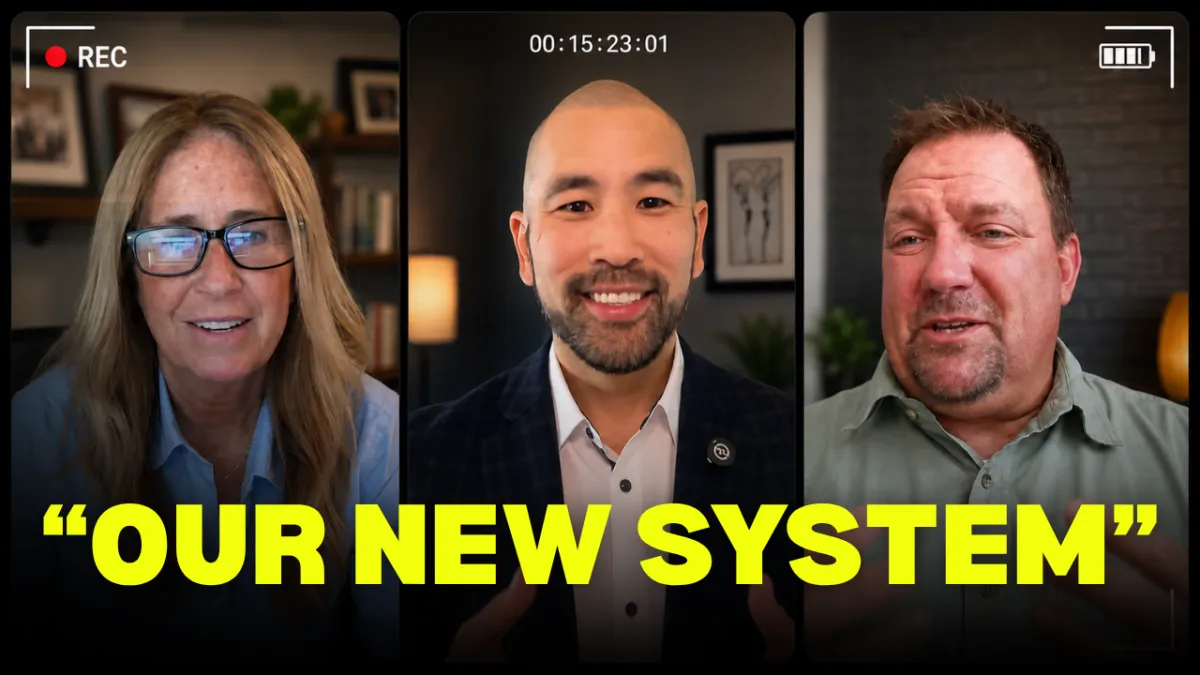
How BrightThinker Grew From $2M to $15M in ARR With Just 4 Reps
TL;DR: BrightThinker grew from $2M to $15M in ARR in three and a half years with just four reps, no SDRs, no BDRs, and no marketing team, while out-executing far larger competitors. The growth came from a documented sales operating system, not from headcount. One rep went from $350K to $8M in the same territory.
The average B2B sales leader's first instinct when revenue stalls is to hire. More reps. More SDRs. A bigger marketing budget. It is also the slowest and most expensive fix on the table, and it often does not work.
There is a cheaper lever most teams ignore: the system the current reps already run. BrightThinker pulled that lever. They grew from $2M to $15M in ARR in three and a half years with just four reps, no SDRs, no BDRs, and no marketing team. Their two biggest competitors each do $500M to $1B a year in revenue. The small team won.
One honest caveat up front, because a sharp leader will ask: they did add reps as they grew, and several churned out before any system existed. What they never built was an SDR team, a BDR team, or a marketing engine. The growth multiple came from the system the reps ran, not from headcount. The clearest proof is one rep going from $350K to $8M in the same territory, no new hire required. This guide breaks down what they fixed, in the order they fixed it, so you can copy it before you approve another hire.
Results at a glance
Revenue: $2M to $15M in ARR in 3.5 years (~78% compound annual growth)
Team: 4 reps, no SDRs, no BDRs, no marketing
Sales Director, Joe Marino: $350K to $8M in the same territory
Rep, Kathleen White: $700K in year one with no prior sales background, and a $70K-per-year, 10-year deal signed in her first 90 days
Where BrightThinker started
Before any system existed, BrightThinker looked like most stalled teams. It had churned through 11 salespeople. Revenue came from a loose side project with no scripts, no process, and no real playbook. As national sales director Coach Joe Marino described his old style: the louder I am and the more I talk, the more I sell. That approach has a ceiling, and the ceiling is the rep's stamina.
The company sat around $2M a year, selling into school districts against competitors many times its size. Two roads were open. Keep hiring into the same broken motion and hope volume covered the gaps, or fix the system the existing reps ran. They chose the system. What follows is the order they fixed it in.
Why hiring more reps wasn't the answer
Adding reps multiplies your current system. If that system converts poorly, you are scaling the losses and the payroll at the same time. Each new hire carries salary, benefits, ramp time, and a hiring cost, and most of that spend is wasted when there is no playbook to plug them into.
Run the math. A rep on a broken process who closes 1 in 5 does not improve when you hire a second rep on the same broken process. Now you have two reps closing 1 in 5 and double the cost. The win rate is the problem, and headcount does not touch the win rate.
BrightThinker proved the inverse. The same number of people, running a better system, produced multiples more revenue. Coach Joe's own number went from $350K to $8M without changing territory. The territory did not get richer. The system got better.
This is the trap most leaders fall into. They read a flat number as a staffing problem and approve a req. The honest read is usually a conversion problem. A missing system costs you more than a missing rep, because it taxes every rep you already employ and every rep you are about to hire. Fix the system first. Then decide whether you even need the headcount.
What BrightThinker changed: a sales operating system
A sales operating system is a documented set of frameworks that govern every stage of a deal, so results come from the process instead of the personality. It is the difference between four reps improvising and four reps running the same proven plays.
BrightThinker's system had four moving parts, and any team can build the same four.
First, a first-call framework. A repeatable opener and question set that earns the meeting before any pitch. It is the same on every call, so a strong call is not luck.
Second, a follow-up cadence. A scheduled rhythm of touches tied to the buyer's purchasing cycle, not the rep's mood. This is what keeps long deals warm for years.
Third, a demo and deep-dive structure. A set sequence for showing the product and breaking down the numbers, so the buyer sees value in the same order every time.
Fourth, a goal-setting and review rhythm. The team set personal goals and professional goals, then ran weekly and 90-day reviews to keep behavior tied to outcomes.
The reason it worked is that it was built for how people actually learn. The frameworks were broken down step by step, in audio, visual, and hands-on form, so a new rep could absorb them without a fire hose. Coach Joe put the call framework on his wall. His team came to working sessions with specific live deals and worked them against the playbook. The system was not a binder on a shelf. It was the daily operating manual.
What does a first call look like when it books meetings without pitching?
It opens with the buyer's world, not the product. The goal of the first call is one yes: the next meeting. You earn it by making the call about them, so the opener carries zero pitch.
Here is the exact opener BrightThinker's team uses.
"Hey, this is Coach Joe. School year is coming up. Figured you could use a quick break. How is it going this year?"
No product. No features. The prospect starts talking, often to a stranger, because the question is about their world. The rep books the appointment before the buyer even knows the full offer.
From there the rep stays in questions, not claims. "How is that working?" "What would you change?" "What do you need?" Each question surfaces a problem the rep can later solve. The buyer talks themselves into the meeting.
The team also reads the org correctly. In their market, the secretary and the custodian run the building, not just the principal. They treat the gatekeeper like the decision-maker, and the gatekeeper opens doors. Most reps burn the gatekeeper trying to get past them. BrightThinker makes the gatekeeper an ally.
How do you follow up so deals do not go cold?
You schedule follow-up on purpose and tie it to the buyer's calendar, not yours. Long B2B deals die in the gaps between touches. A cadence closes the gaps.
BrightThinker runs monthly check-ins on open opportunities. The check-ins are personal, not pushy. A rep might reference a game the buyer mentioned, or send a quick note that has nothing to do with the product. The relationship stays warm, so when the buying window opens, the rep is already inside it.
The timing is deliberate. The team knows when their buyers purchase and, more important, when they prepare to purchase. They time the touch to land right before the window. That is how a rep reactivates a contact who said no months earlier. One rep sent a lighthearted, personal video to dormant contacts and pulled six responses in under two hours, in summer, with several buyers reopening proposals.
The proof shows up under pressure. When budget cuts hit Kathleen White's territory harder than anyone's, she still finished up 15%. The cadence kept her largest district deals alive while the budgets reset. Big districts take years to close. Without a system, they go quiet and disappear. With one, they stay on the board.
How do you onboard a new rep into the system?
You hand them the system, not a quota and a prayer. A documented playbook lets a new hire produce before they would normally finish ramping.
Kathleen White is the case in point. She came from a career as a school principal with no traditional sales background. She did not improvise her way to results. She ran the framework. She came to every working session with a notebook and specific deals to walk through, and she installed the plays exactly as taught.
The output was immediate. In her first year she broke every company record, selling $700K. Within her first three months she signed a $70,000-per-year deal on a ten-year term. A first-year rep with no sales history outperformed veterans, because the system carried what experience usually has to.
Onboarding started before the first call. The team set personal goals and professional goals together, then mapped the behaviors to hit them. New reps reviewed those documents on a rhythm to stay anchored to the big picture. The frameworks were taught in small, layered pieces, so nobody drowned in a single overloaded session. For a leader, this is the real unlock. A system turns the next hire from a gamble into a process.
How did a 4-person team out-execute competitors many times its size?
They got structured before they got bigger. Coach Joe started as a rep, became national sales director, kept selling his own territory, and built a tight four-person team. Four reps covered the entire country with no SDRs feeding leads and no marketing generating demand. They still out-executed rivals doing $500M to $1B a year in revenue.
Size was their disadvantage on paper and their advantage in practice. A small team can run one system with discipline. A giant org cannot turn that fast. While the competitors leaned on brand and budget, BrightThinker leaned on a buyer-first process the larger teams were too rigid to copy.
The clearest proof is Coach Joe's trajectory. He used our free sales content to fix his approach, then went deeper with one-on-one coaching. His number climbed from $350K in year one to $1.3M, then $4M, then $6M, then $8M. Same person. Same territory. A better system at each step. In a single year the team added $5M in ARR, with individual reps posting gains of 100% and 300%.
The lesson for a leader is uncomfortable. The teams beating you may not have more resources. They may have a tighter system. Resources are easy to envy and hard to copy. A system is the opposite. You can start building one Monday.
Where BrightThinker is now, and what a sales leader should take from it
BrightThinker did not grow by getting louder or by building a bigger org. They grew by getting structured. Four reps, a documented system, and the discipline to run it took them from $2M to $15M in ARR while far bigger competitors stood still.
The pattern repeats across every team that scales without bloat. Fix the first call. Schedule the follow-up. Document the plays. Onboard new reps into the system instead of into the deep end. Revenue follows structure.
If your team is working hard and still missing the number, the gap is almost never effort. It is the system. Before you approve another hire, find out what the team you already have could do with a better one.
FAQ
Can you grow revenue without hiring a bigger team?
Often, yes. A documented sales operating system lets your current reps convert more of the pipeline you already have. BrightThinker added $5M in a year and beat competitors doing $500M to $1B a year with just four reps and no SDR, BDR, or marketing support.
Why does adding more reps not increase revenue?
More reps multiply your existing system. If the system is broken, you scale the losses and the payroll at the same time. Fix the playbook first, then decide if you even need the headcount.
What is a sales operating system?
It is a documented set of frameworks for every stage of a deal: the first call, the follow-up cadence, the demo, and the goal-setting rhythm. It makes results depend on the process, not the personality of the rep.
How many salespeople did BrightThinker have?
Four reps carrying bags: Coach Joe, who started as a rep and became sales director while keeping his own territory, plus three reps he brought on. No SDRs, no BDRs, no dedicated marketing team.
What is the first sales system a leader should fix?
The first call. BrightThinker replaced product pitching with a buyer-first conversation that books meetings before the rep ever explains the product.
How do you keep long B2B deals from going cold?
Use a consistent monthly check-in cadence with personal, purpose-driven follow-up tied to the buyer's purchasing cycle. It is what kept Kathleen's largest district deals alive through budget cuts.
Want results like BrightThinker's, growth without a bigger, more expensive team? Book a free Executive Snapshot below. We will look at your pipeline and your real call data, then show you the three best moves to grow your number.


Mail
Facebook
LinkedIn
X
Pinterest
Snapchat
Reddit