Three B2B Teams, 7 to 14 More Points of Win Rate, Zero New Reps
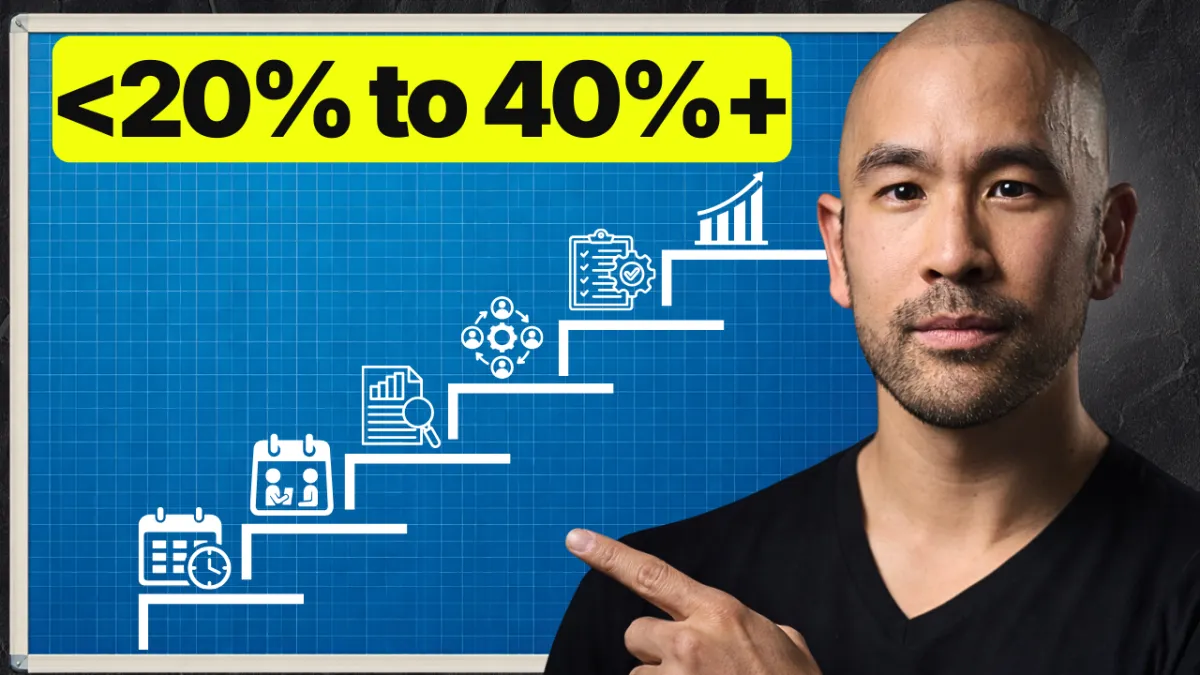
Most teams stuck at 20-25% win rates think they have a lead problem. The data points somewhere else. Here is what changed for three different orgs.
Executive Summary: Across three deployments of the Revenue Engine OS, B2B teams raised win rates 7 to 14 points without adding headcount: Mid-Market SaaS (58 AEs) 21% to 28% in 90 days and +$1.4M; SMB Professional Services (32 AEs) 24% to 38% in 60 days and +$2.3M; Enterprise SaaS (104 AEs) 26% to 34% in 180 days, +$11.8M, with forecast accuracy from 63% to 82%. The engine combines the POWERFUL framework with installed manager coaching and rep rollout.
Results at a glance
Mid-Market SaaS, 58 AEs: 21% to 28% in 90 days, +$1.4M, cycle 24% faster
SMB Professional Services, 32 AEs: 24% to 38% in 60 days, +$2.3M
Enterprise SaaS, 104 AEs: 26% to 34% in 180 days, +$11.8M, forecast accuracy 63% to 82%
Venli's own business: 54.7% to 58% win rate in 2025
Why do B2B win rates stall at 20-25%?
RepVue data across 249 organizations puts average quota attainment at 43.24%, meaning over half of teams miss the number. Most respond by adding reps or pouring more into the top of the funnel. The deals keep stalling. The pattern underneath is consistent:
Every AE runs their own version of the sales process
Pipeline reviews are status updates, not coaching
Enablement measures events delivered, not behavior changed
Managers live in the CRM and still cannot say why deals die
As we put it internally: good people do not fix broken systems, and broken systems break good people.
What actually moves the number?
Two parts working together. POWERFUL, a scoring lens reps apply to every stakeholder (Pain, Opportunity cost, Wants, Executive influence, Resources, Fear of failure, Unequivocal trust, Little stuff), and the Revenue Engine OS, which installs that lens through manager coaching and rep rollout rather than a one-day training.
We proved it on our own business first, moving from a 54.7% to a 58% disco-to-close win rate in 2025.
What did the three deployments deliver?
Mid-Market SaaS (Fintech), 58 AEs.
Win rate 21% to 28% in 90 days, +$1.4M in revenue, demo-to-close up 12 points, sales cycle from 89 to 68 days (24% faster).
SMB Professional Services, 32 AEs.
Win rate 24% to 38% in 60 days, +$2.3M in revenue, with reps spending 30% more time on high-propensity deals.
Enterprise SaaS, 104 AEs.
Win rate 26% to 34% in 180 days, +$11.8M in revenue, and forecast accuracy from 63% to 82%.
What should a sales leader take from this?
If your win rate is stuck, more leads and more reps rarely move it. The lever is a single shared process, installed through manager coaching, so every rep runs the motion your best rep runs. That is what produced 7 to 14 point lifts across three very different orgs.
Frequently Asked Questions
How do you increase sales win rate without adding reps?
Install one shared sales process and coach managers to reinforce it. Across three deployments, teams raised win rates 7 to 14 points with no added headcount, including a 58-AE team that went from 21% to 28% and added $1.4M.
Why are B2B sales win rates stuck at 20-25%?
Because every rep runs their own version of the process and pipeline reviews are status updates, not coaching. Industry data puts average attainment near 43%, so over half of teams miss. A shared, coached system is what moves it.
How do you shorten a B2B sales cycle?
Standardize qualification so reps spend time on the right deals. One 58-AE team cut its cycle from 89 to 68 days, 24% faster, while raising win rate.
What is a revenue operating system?
A shared process for qualifying and advancing every deal, installed through manager coaching rather than a one-day training. It is what produced 7 to 14 point win-rate lifts across three different orgs.
Want a 7 to 14 point win-rate lift like these teams got, without adding reps? Book a free Executive Snapshot below.


Mail
Facebook
LinkedIn
X
Pinterest
Snapchat
Reddit